Maritime Informatics & Robotics Summer School 2025

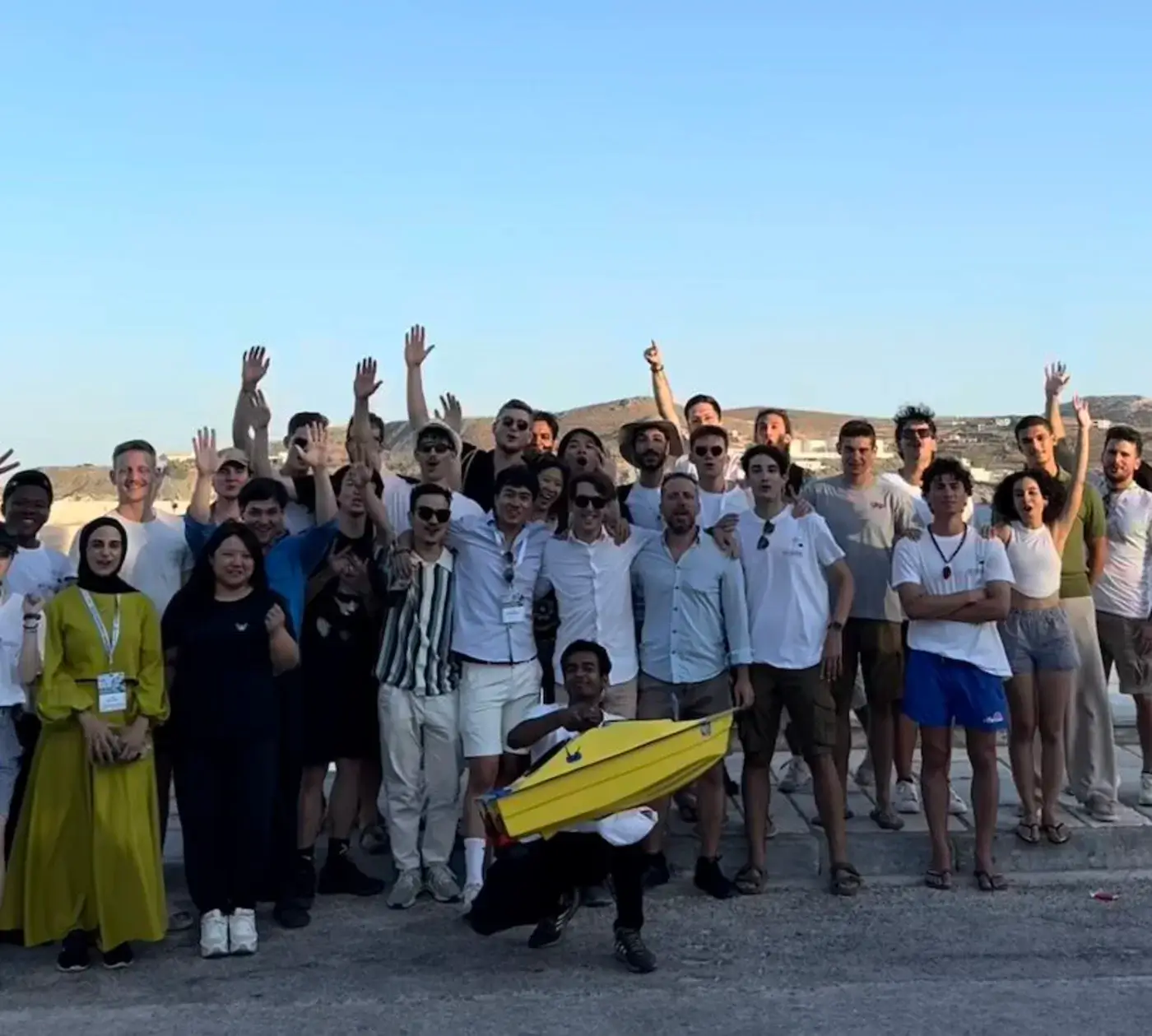
From June 18-27, 2025, SmartMove Lab welcomed approximately 45 students from universities across Europe to the island of Syros for an intensive Summer School in Maritime Informatics & Robotics. Over ten transformative days, participants progressed from theory to practice—assembling autonomous surface vessels, programming navigation systems, simulating swarm behaviors, and ultimately testing their creations in the waters of the Aegean Sea.
The program, organized in partnership with 28DIGITAL (formerly EIT Digital), brought together students from diverse backgrounds in computer science, engineering, robotics, and maritime technology. What began in the classroom and laboratory culminated on the docks and in the open sea, where weeks of learning came to life.
Program Structure
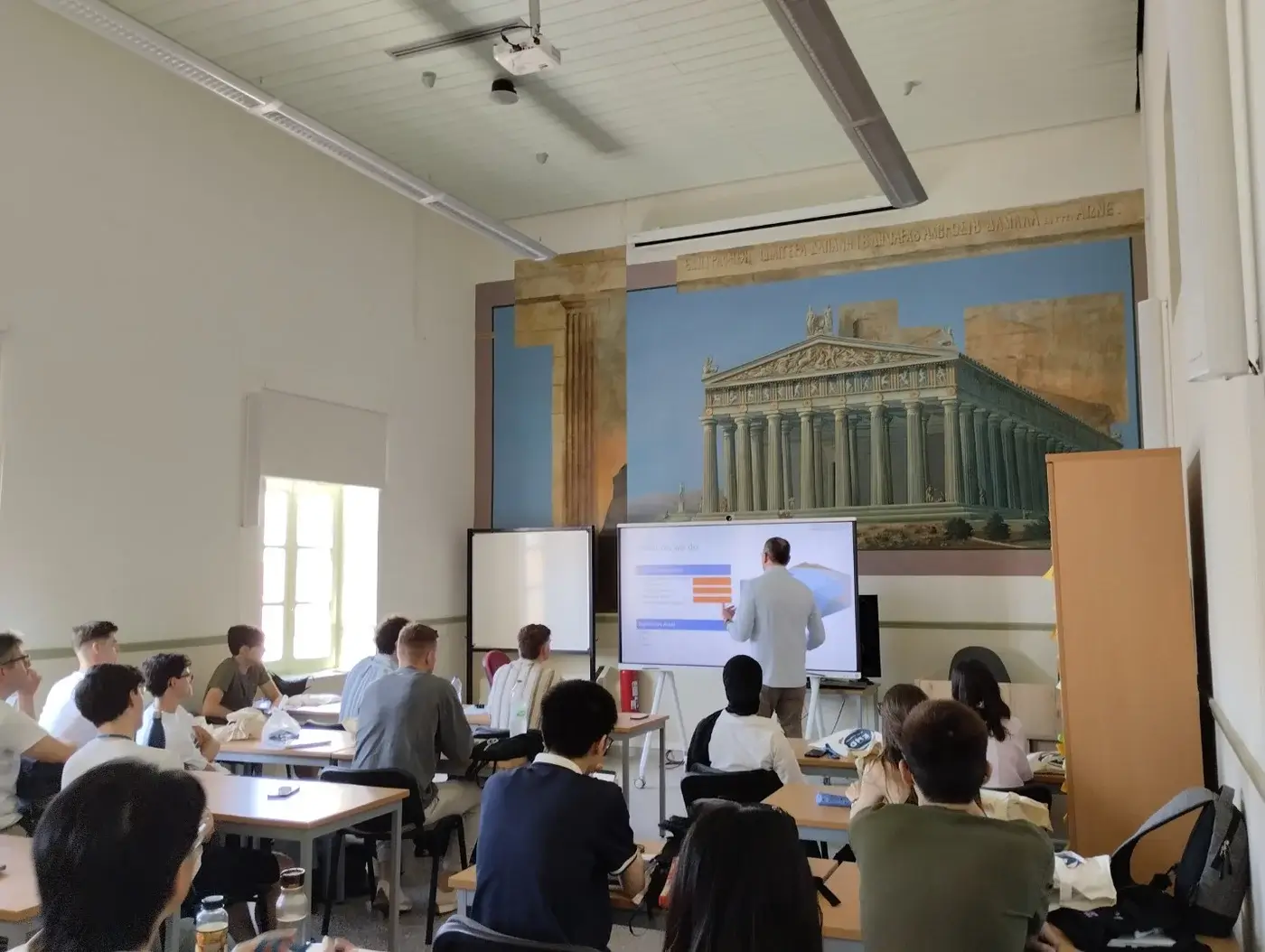
The summer school followed a carefully designed curriculum combining morning expert lectures with afternoon hands-on laboratory sessions. This dual approach ensured that theoretical knowledge was immediately reinforced through practical application.
Lecture Topics
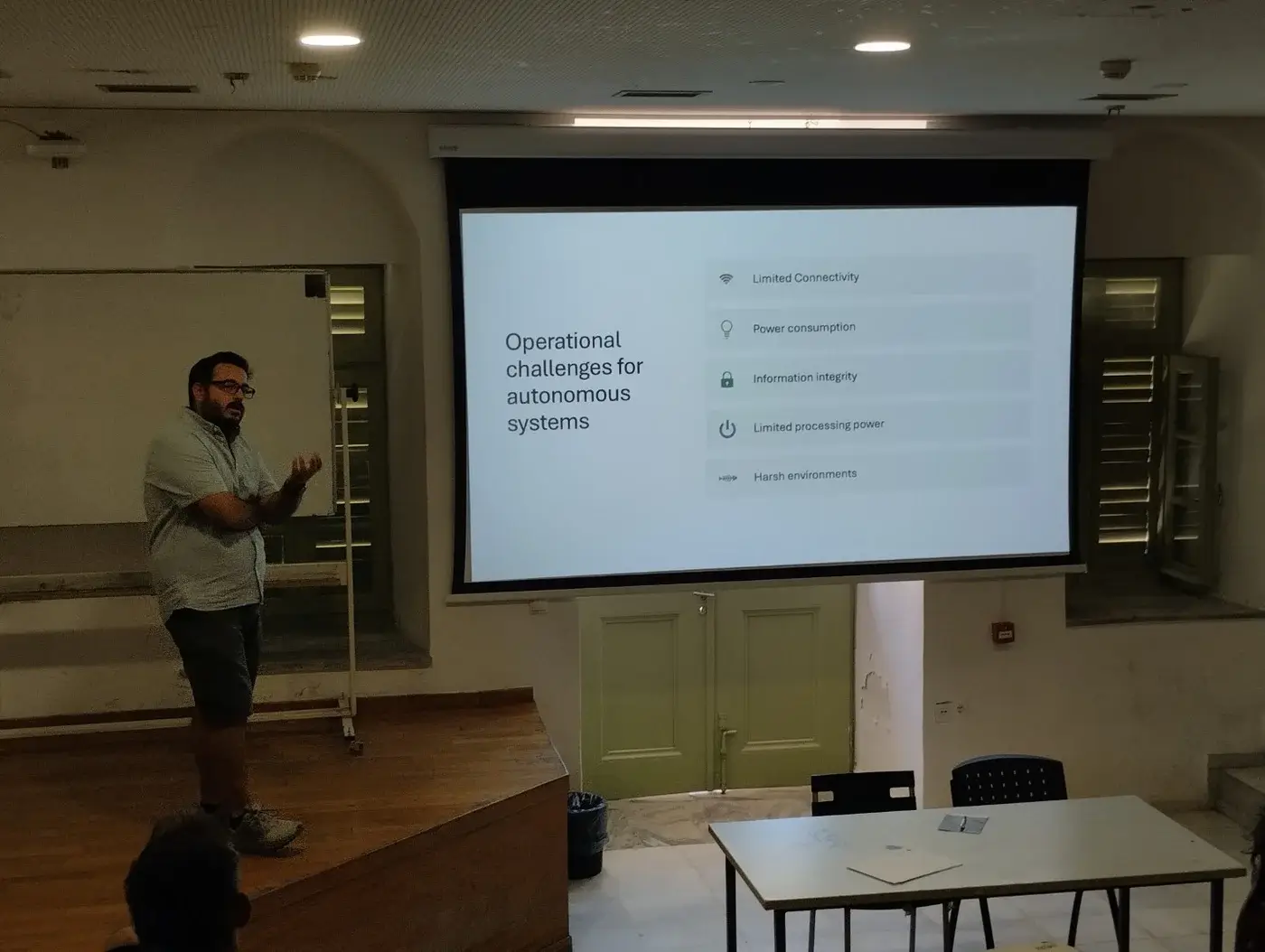
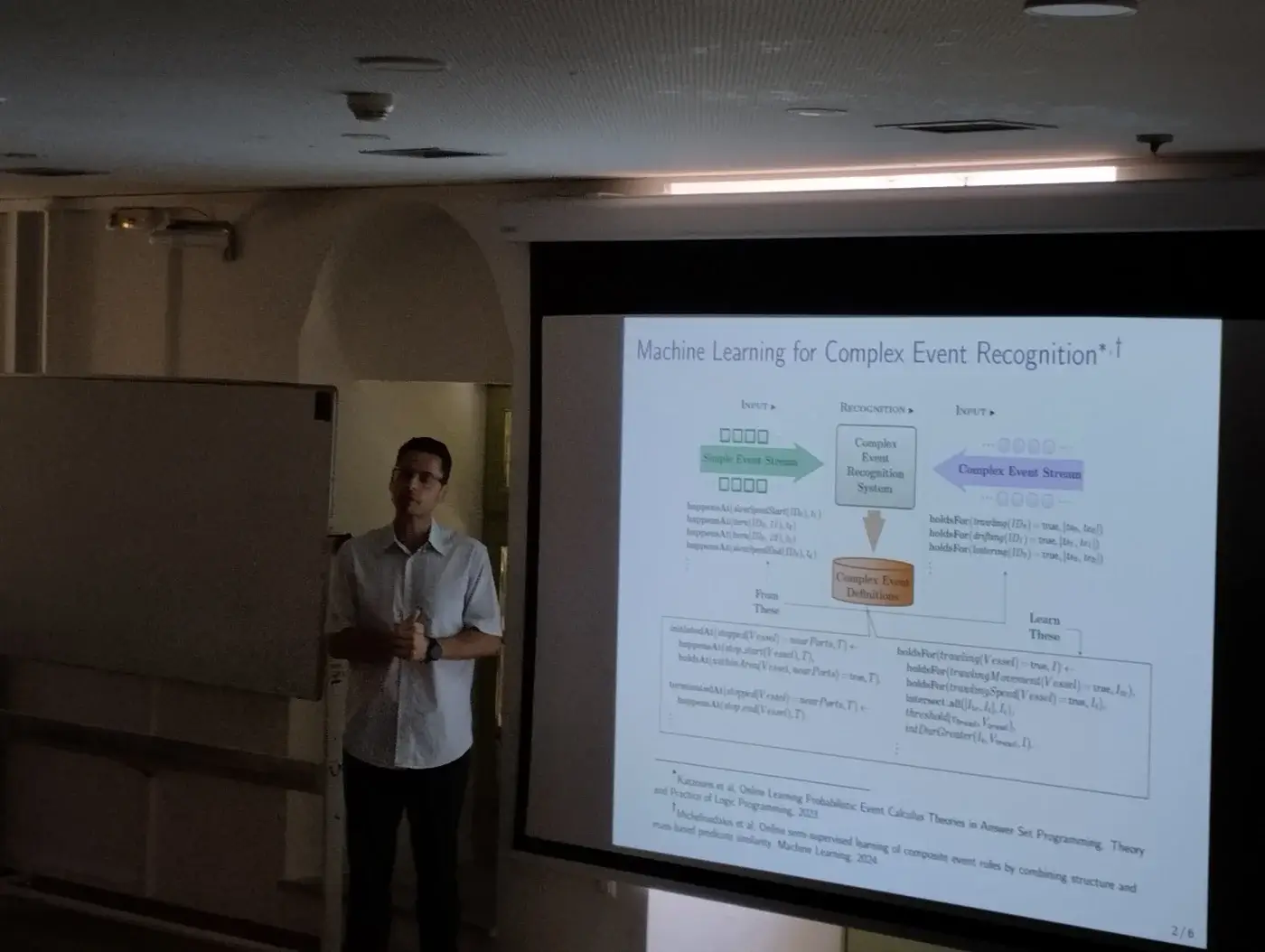
Each morning, students attended presentations from researchers and industry professionals covering the breadth of maritime technology:
- Maritime Informatics – Data-driven approaches to vessel tracking, AIS systems, and maritime intelligence
- Marine Robotics – Autonomous systems design, sensor integration, and control architectures
- Motion Control & Navigation – From control algorithms to real-world autonomous navigation
- System Architectures – Distributed computing frameworks including MQTT and Kafka for coordinating autonomous fleets
- Visual Navigation – Computer vision techniques for autonomous vessel guidance
- Marine Technology & Geohazards – Oceanographic applications and underwater systems including ROV operations
- GIS & Oceanography – Spatial data analysis and story mapping for maritime applications
Hands-On Laboratory Progression
Afternoons were dedicated to a structured seven-lab progression, taking students from basic assembly to autonomous operation:
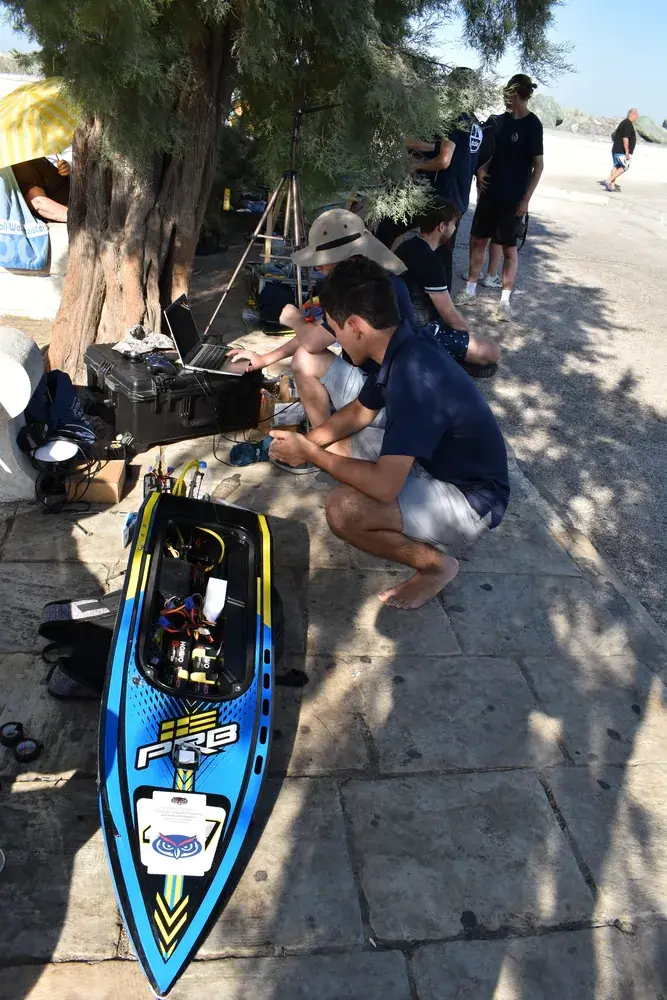
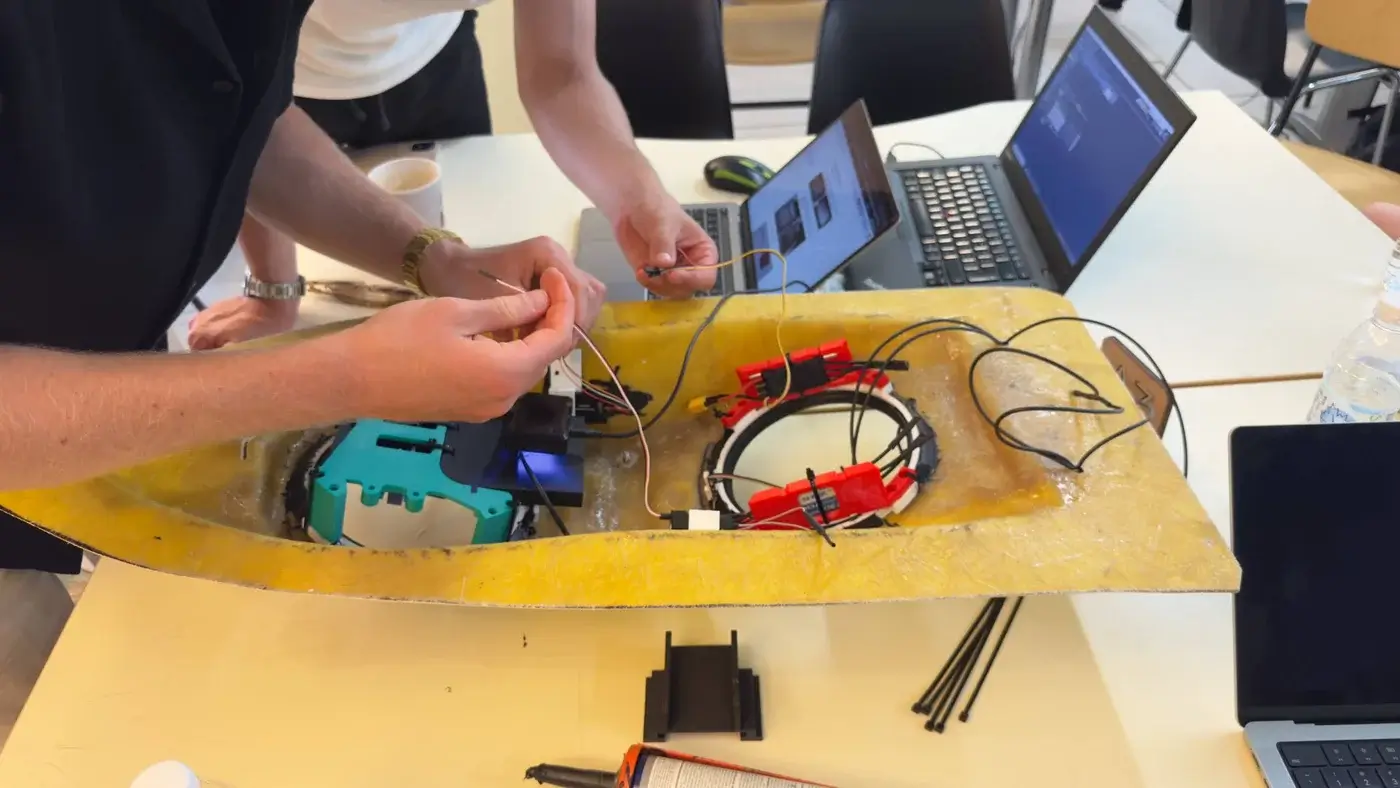
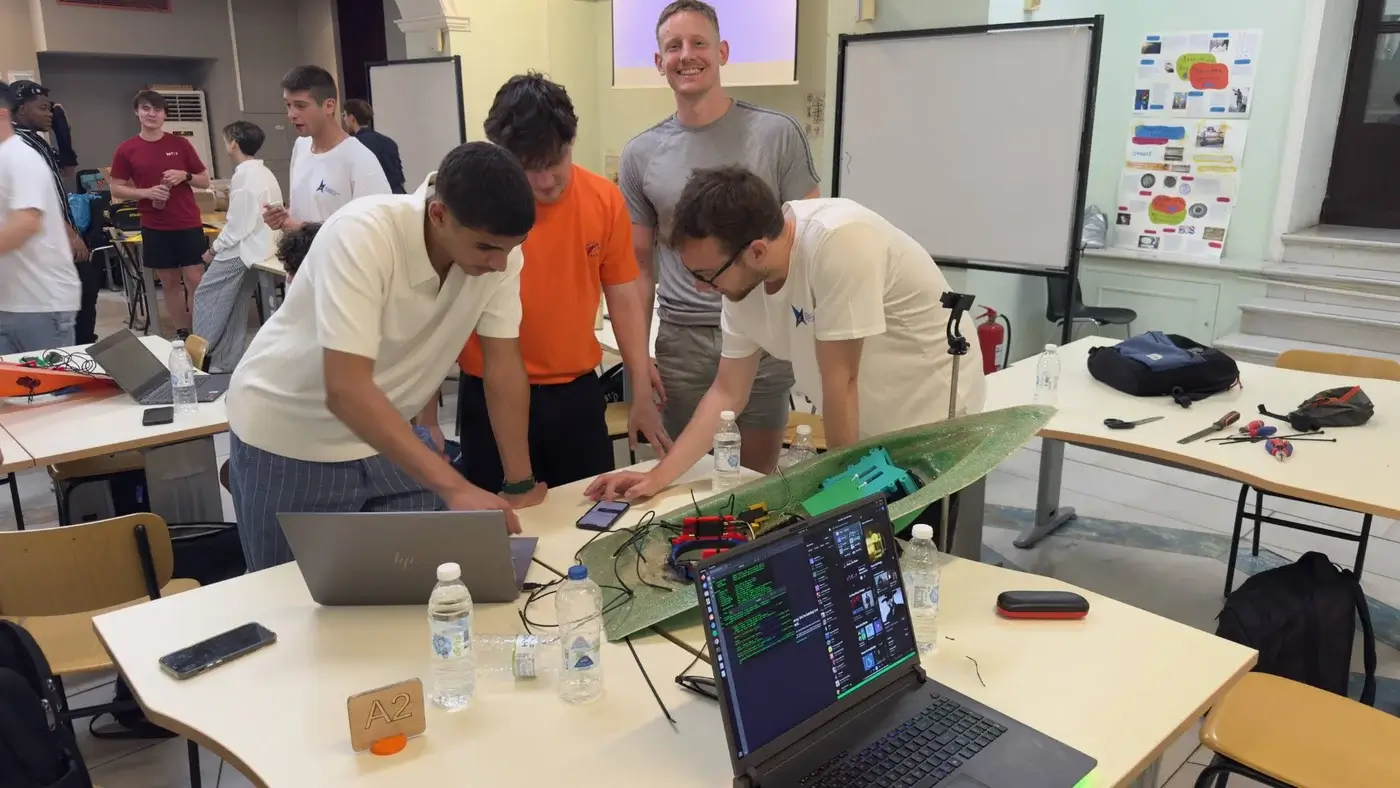
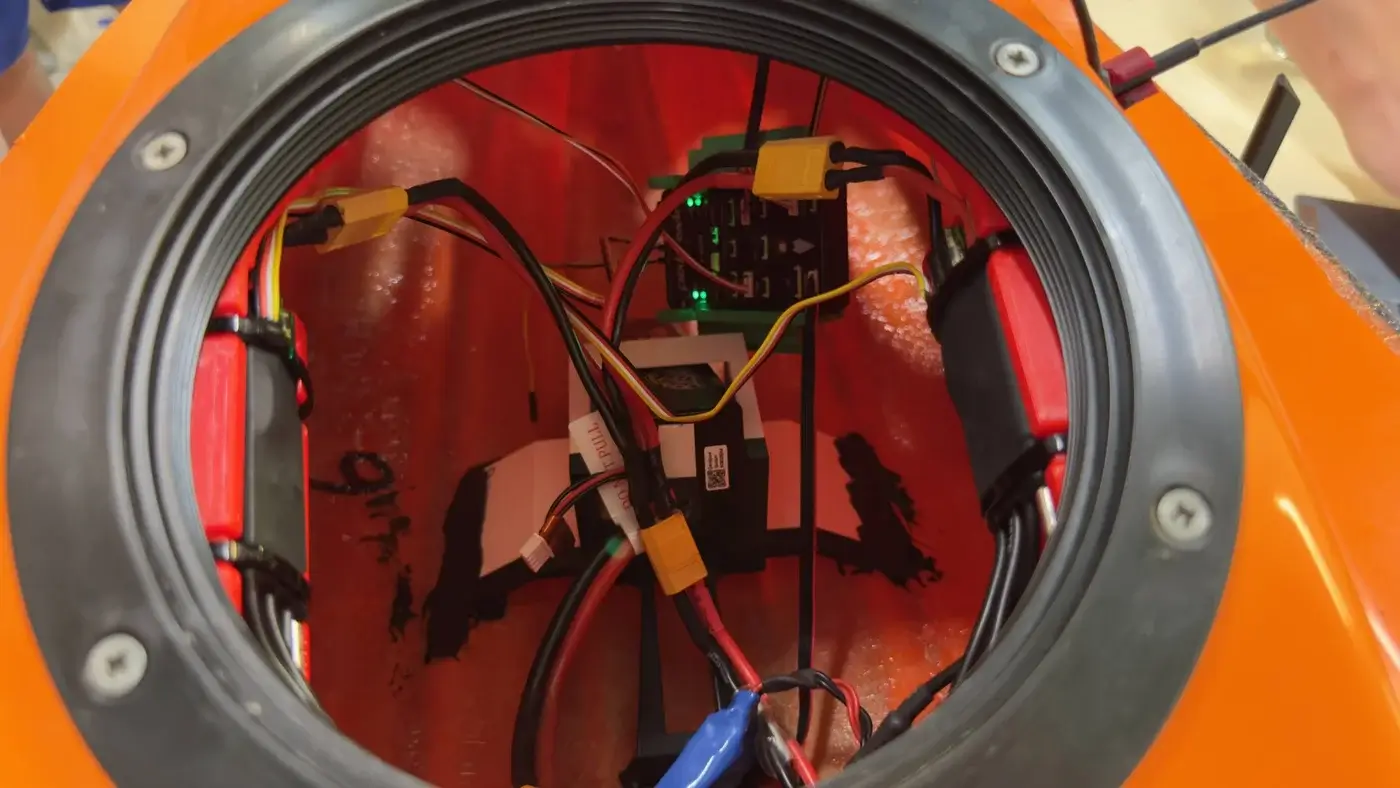
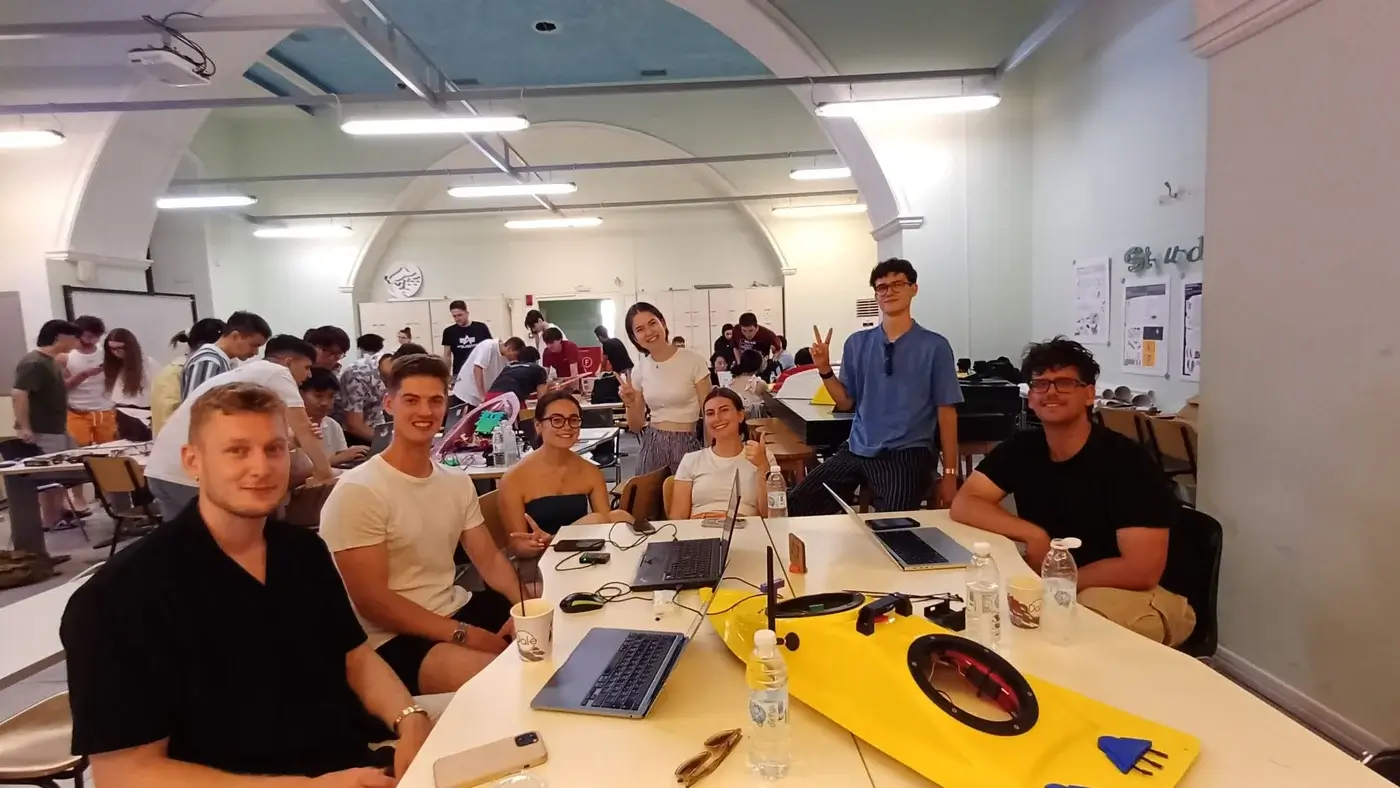
- Team Building & Hardware Assembly – Forming interdisciplinary teams and constructing autonomous surface vessels from components
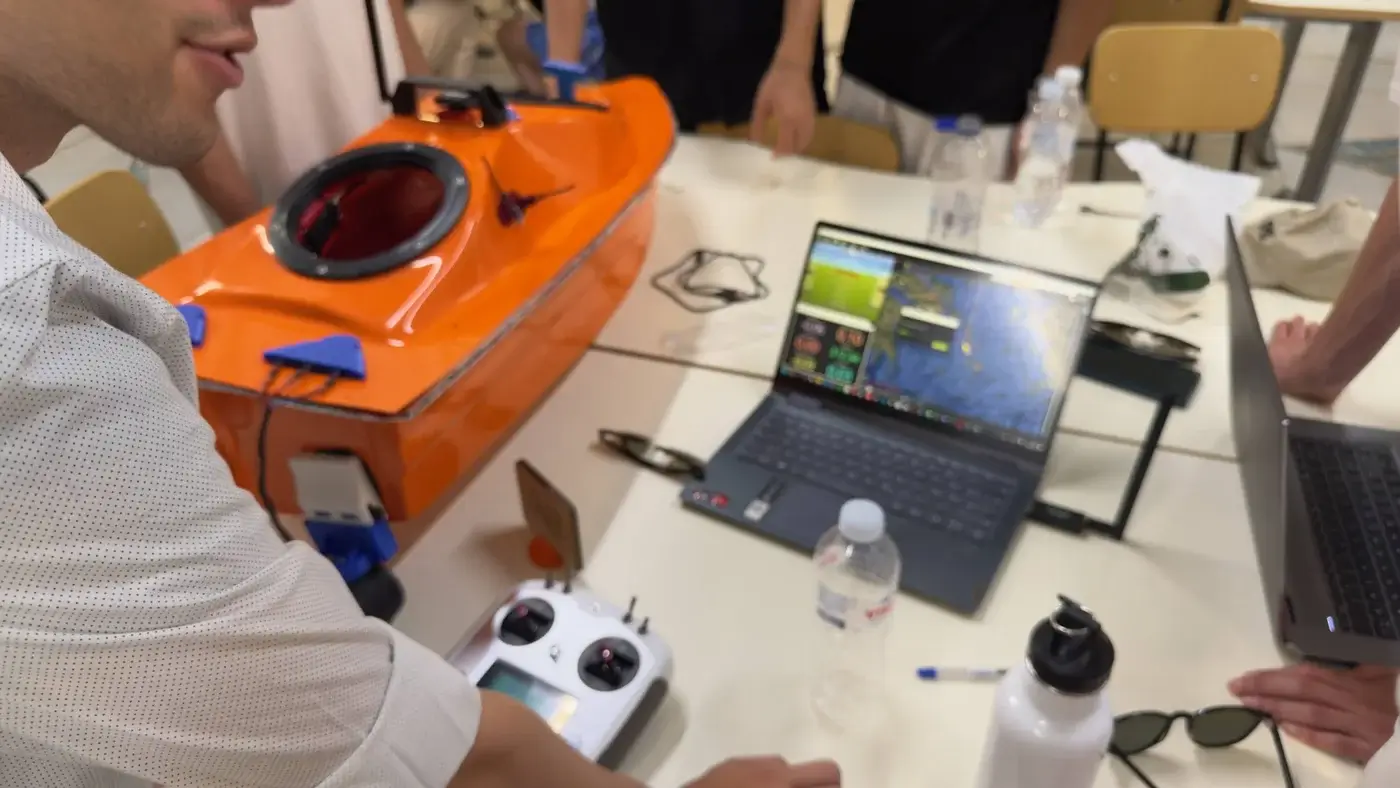
- ArduPilot & Mission Planner – Installing rover firmware, configuring autopilot systems, and understanding telemetry logging
- RC Setup & Parameter Tuning – Fine-tuning vessel behavior through mode configuration and parameter optimization
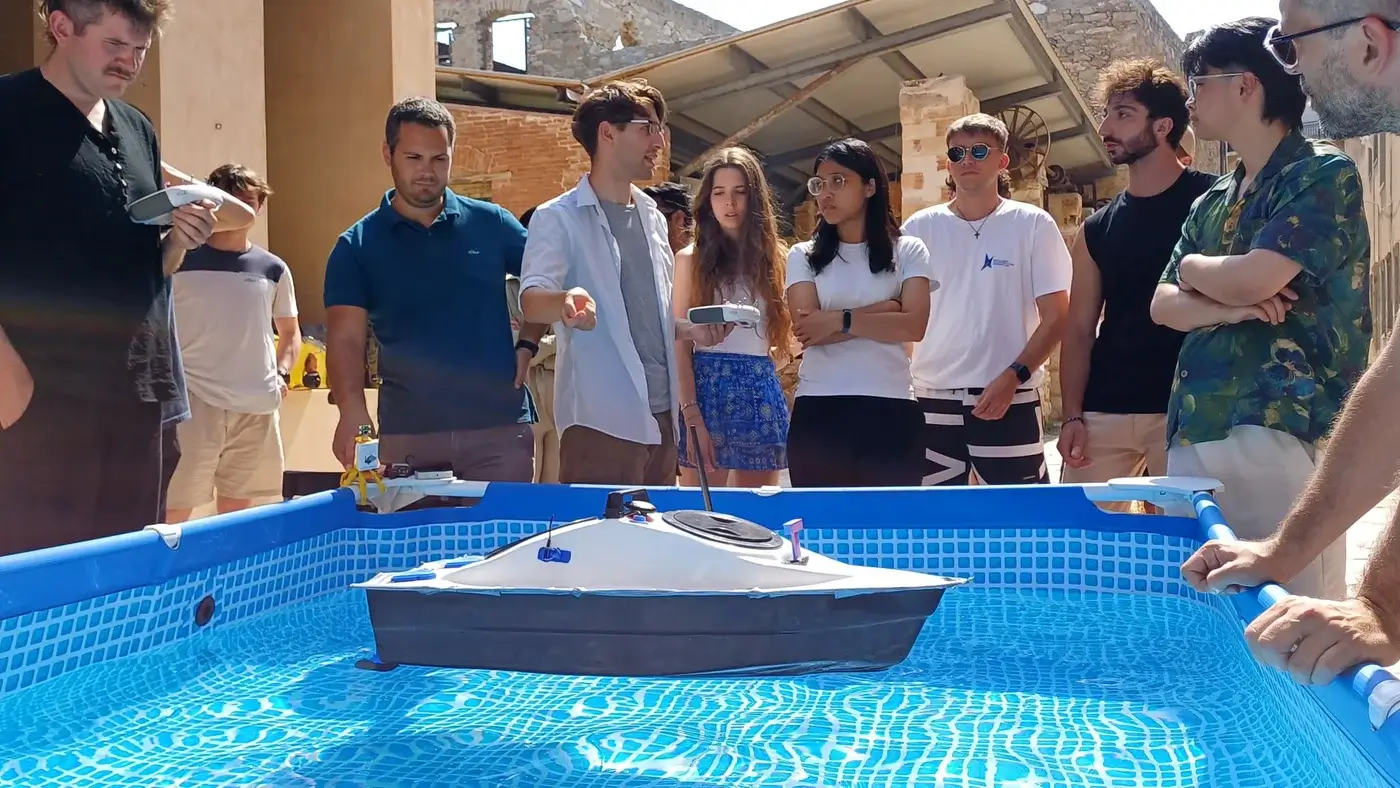
- Pool Testing – Initial trials in a controlled environment at university facilities, validating basic functionality
- Software-in-the-Loop (SITL) Simulation – Testing autonomous modes and swarm formations in a virtual environment before real-world deployment
- Companion Computer Integration – Connecting Raspberry Pi 5 computers to autopilot systems for advanced onboard processing
- Python Programming & Collision Avoidance – Developing custom navigation logic, implementing safety constraints, and programming coordinated multi-vessel behaviors
From Simulation to Swarm
A highlight of the technical curriculum was the exploration of swarm coordination using ArduPilot’s Software-in-the-Loop (SITL) simulation environment. Students experimented with multi-vessel formations, implementing distance-based decision making and inter-vessel communication protocols. These simulations allowed teams to safely test coordinated behaviors—formation flying, leader-follower patterns, and collision avoidance—before deploying their code on physical vessels.
Pool Tests & Sea Trials
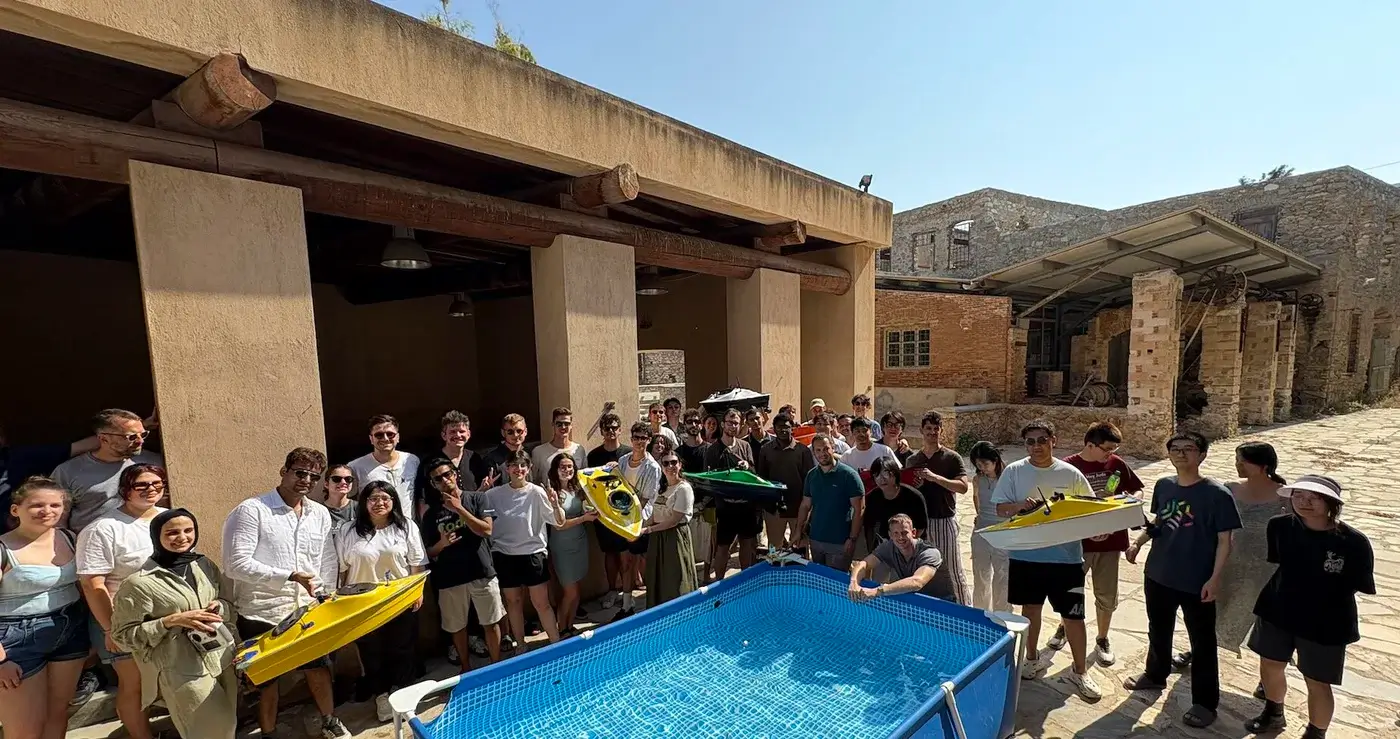
The controlled environment of the university pool served as a crucial intermediate step between simulation and sea. Here, students fine-tuned their vessels’ responses, adjusted parameters, and validated that their autonomous systems performed as expected. Small-scale robotic boats held course, responded to commands, and demonstrated the promise of weeks of careful programming.
But the real test awaited in the Aegean. During sea trials, vessels faced wind, waves, and currents—conditions no simulation can fully replicate. Watching their autonomous creations navigate real maritime environments was a defining moment for many participants, transforming theoretical knowledge into tangible achievement.
Learning Through Challenges
Of course, not everything went smoothly—and that was part of the learning experience. With so many new concepts condensed into ten intensive days, students inevitably encountered their share of mishaps. Command signals occasionally interfered between vessels. A couple of boats took on water during pool tests (fortunately with no major damage). Troubleshooting became a daily activity.
But these challenges proved invaluable. Debugging real hardware problems, adapting to unexpected behavior, and learning to work methodically through issues are skills that no simulation can teach. Nikos Sapountzis, a research intern at SmartMove Lab with extensive hands-on experience from our own autonomous vessel trials, provided invaluable support throughout. Together with other lab members, volunteers, and the students themselves—who quickly learned to help one another—every problem became an opportunity to deepen understanding.
No boats were lost, no major failures occurred, and by the end, teams had developed not just working vessels but also the resilience and problem-solving mindset essential for real-world engineering.
Aegean RoBoat Race
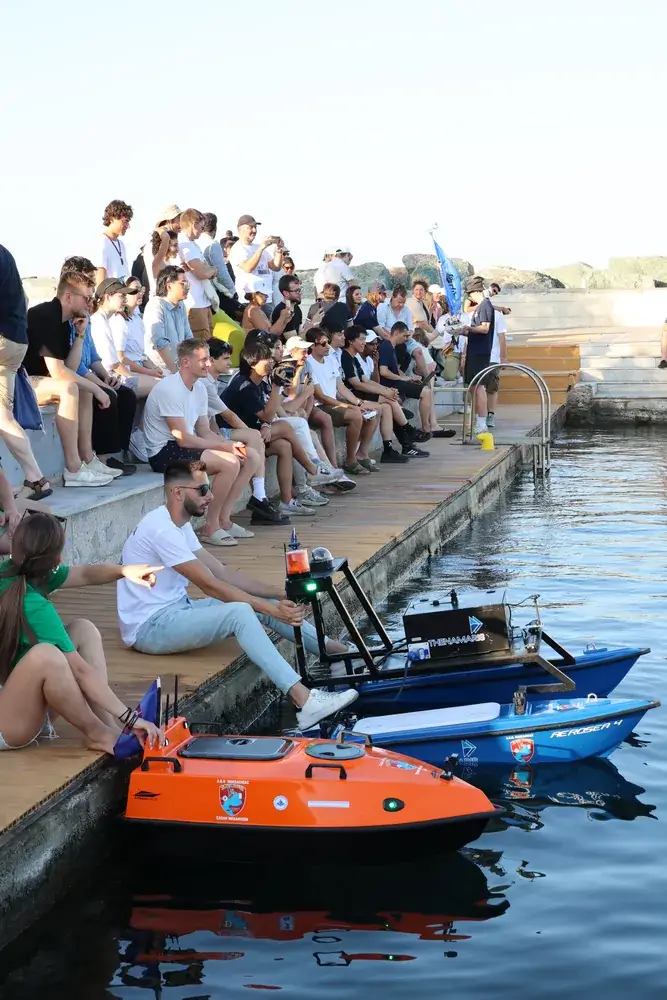
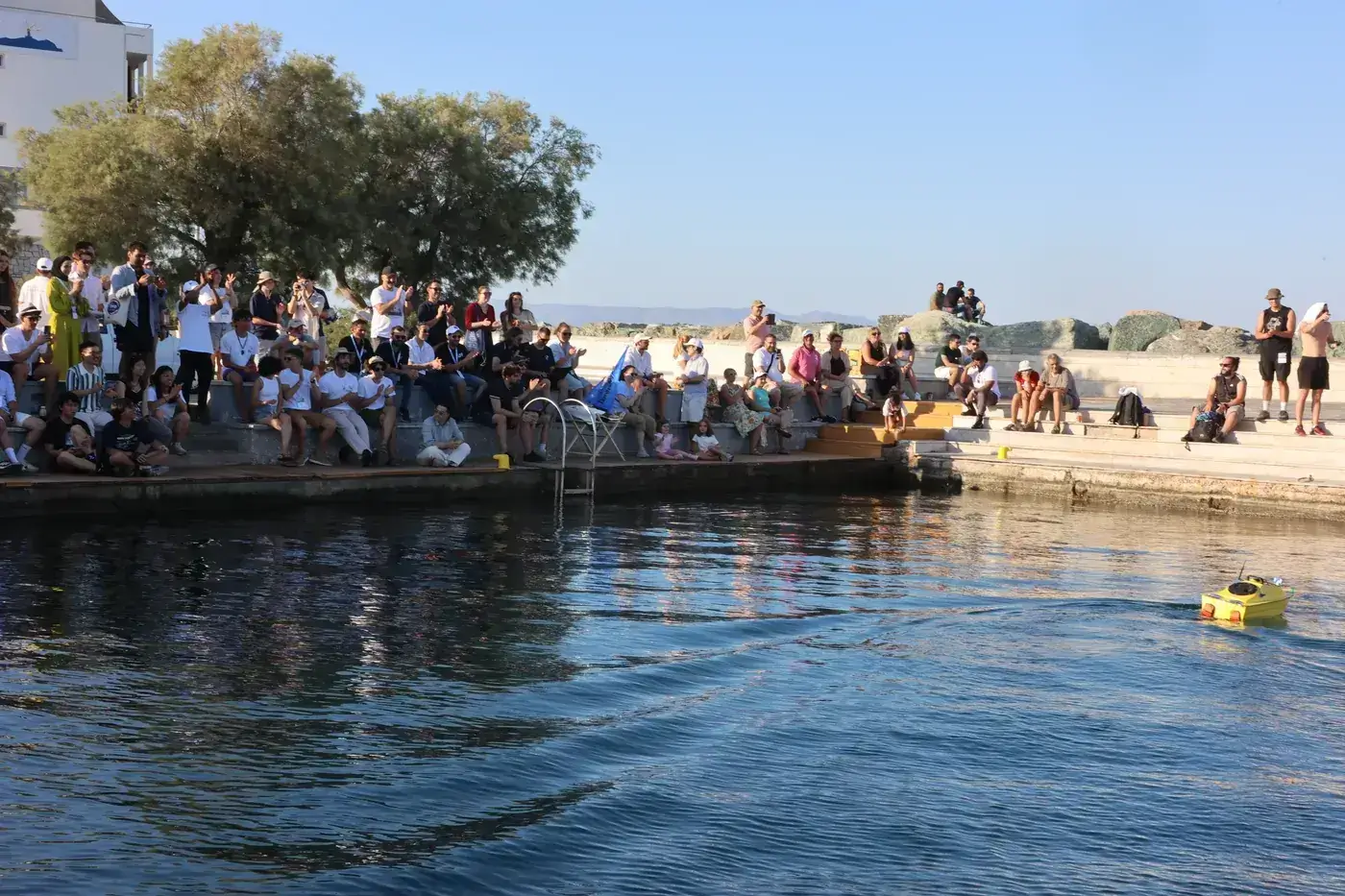
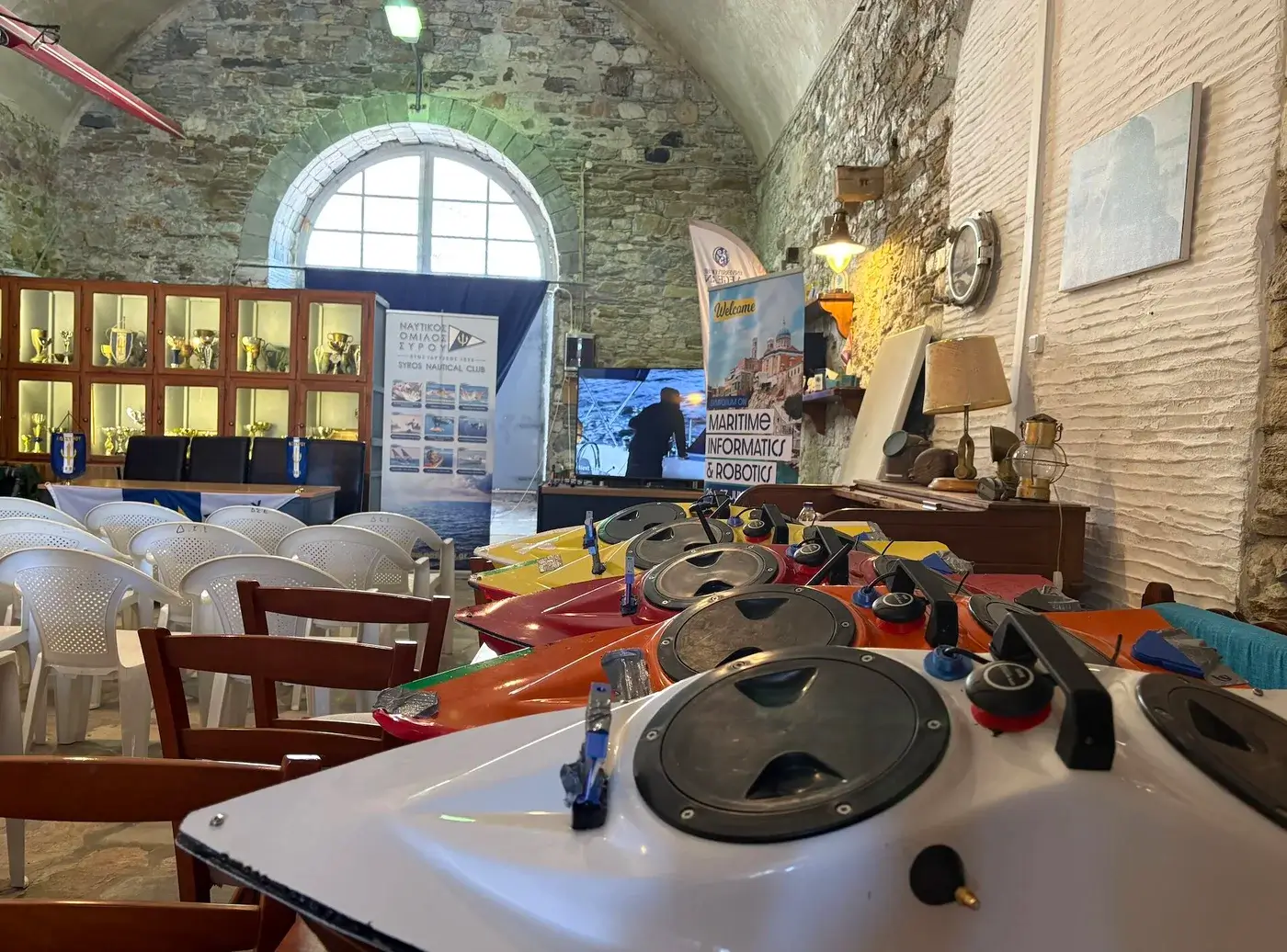
The summer school concluded with the Aegean RoBoat Race, an exhibition event held at the Nautical Club of Syros—a venue steeped in maritime heritage and the perfect backdrop for an event looking firmly toward the future.
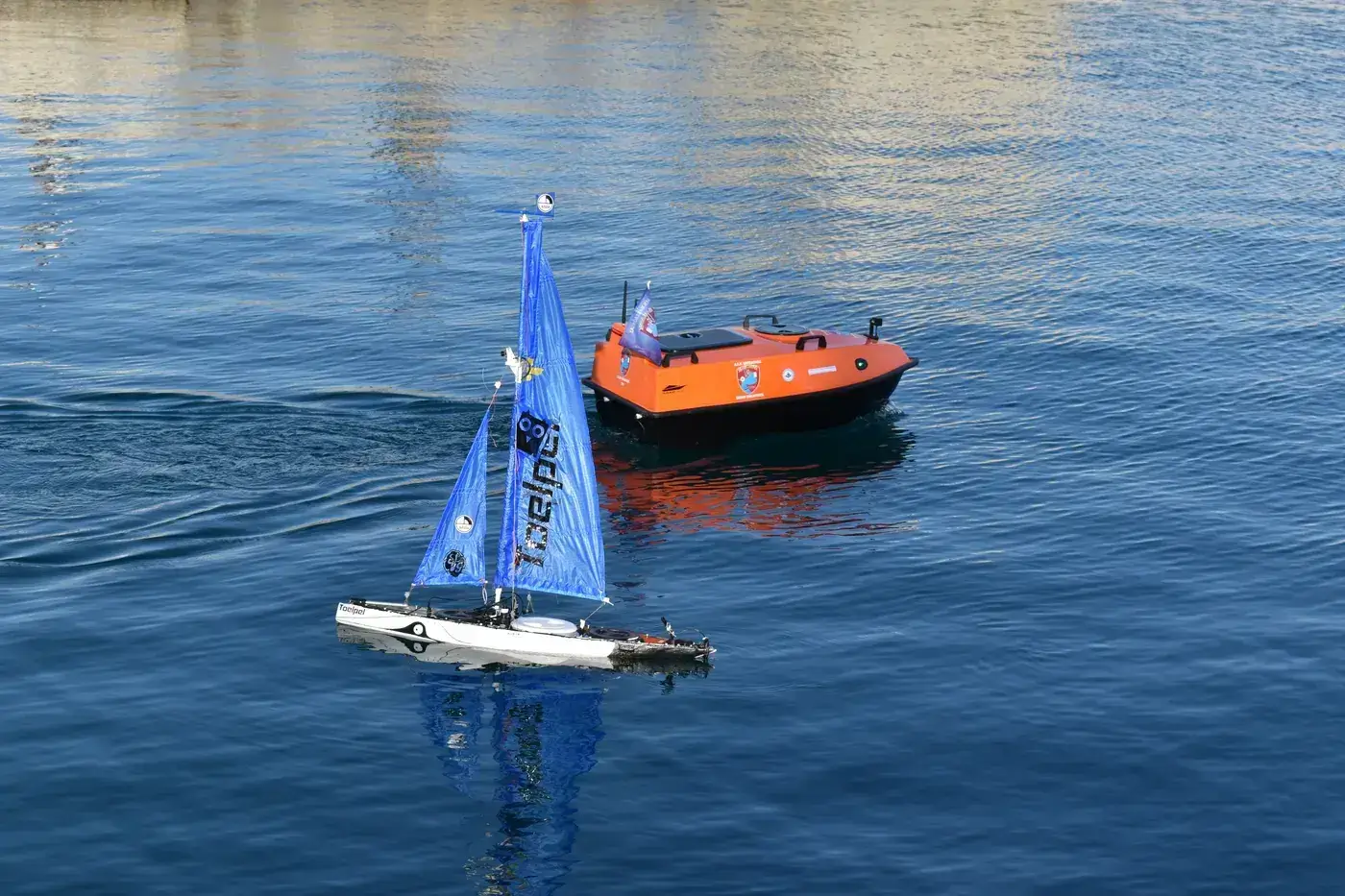
This year’s event was more exhibition than competition, designed to showcase autonomous vessel capabilities and foster community among researchers in the field. Beyond the student-built vessels from the summer school, the event welcomed participants from:
- Greece – Teams from Greek universities and institutions
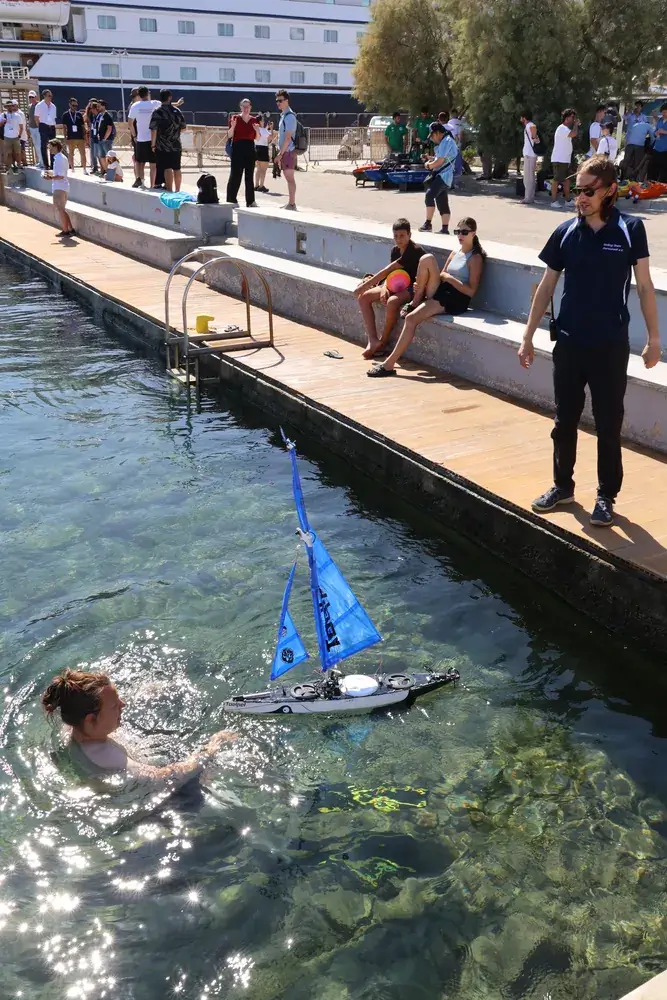
- Germany – The Sailing Team Darmstadt e.V., a student group from the Technical University of Darmstadt developing unmanned, energy-self-sufficient sailboats with the ambitious goal of crossing the Atlantic Ocean autonomously
- United States – Researchers from the Center for Connected Autonomy and Artificial Intelligence (C2A2) at Florida Atlantic University’s College of Engineering and Computer Science (read about their experience in Syros)
The gathering brought together researchers, students, and enthusiasts from universities and naval academies worldwide, forming the nucleus of a growing international community dedicated to maritime autonomy.
IEEE Symposium Connection
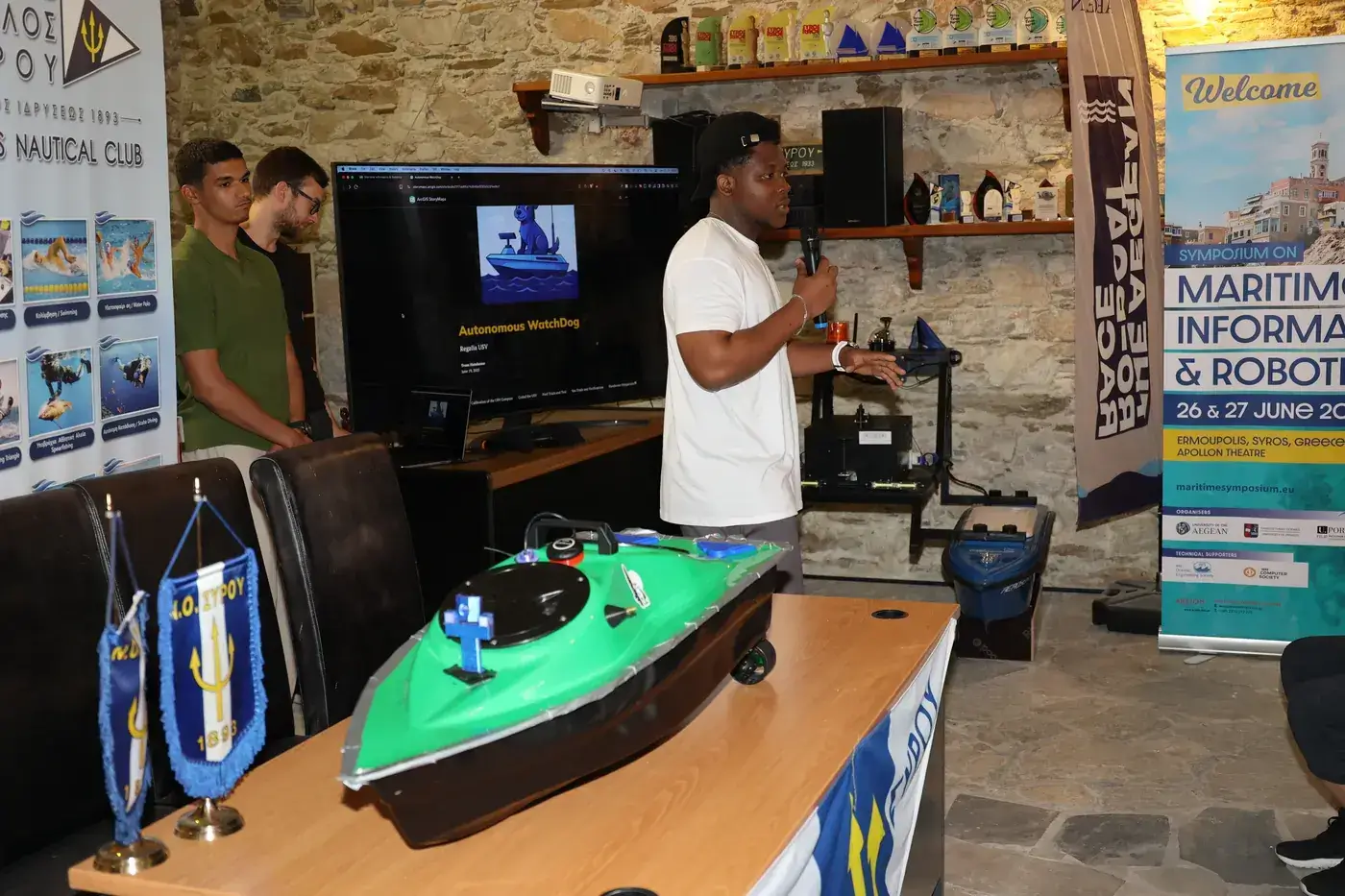
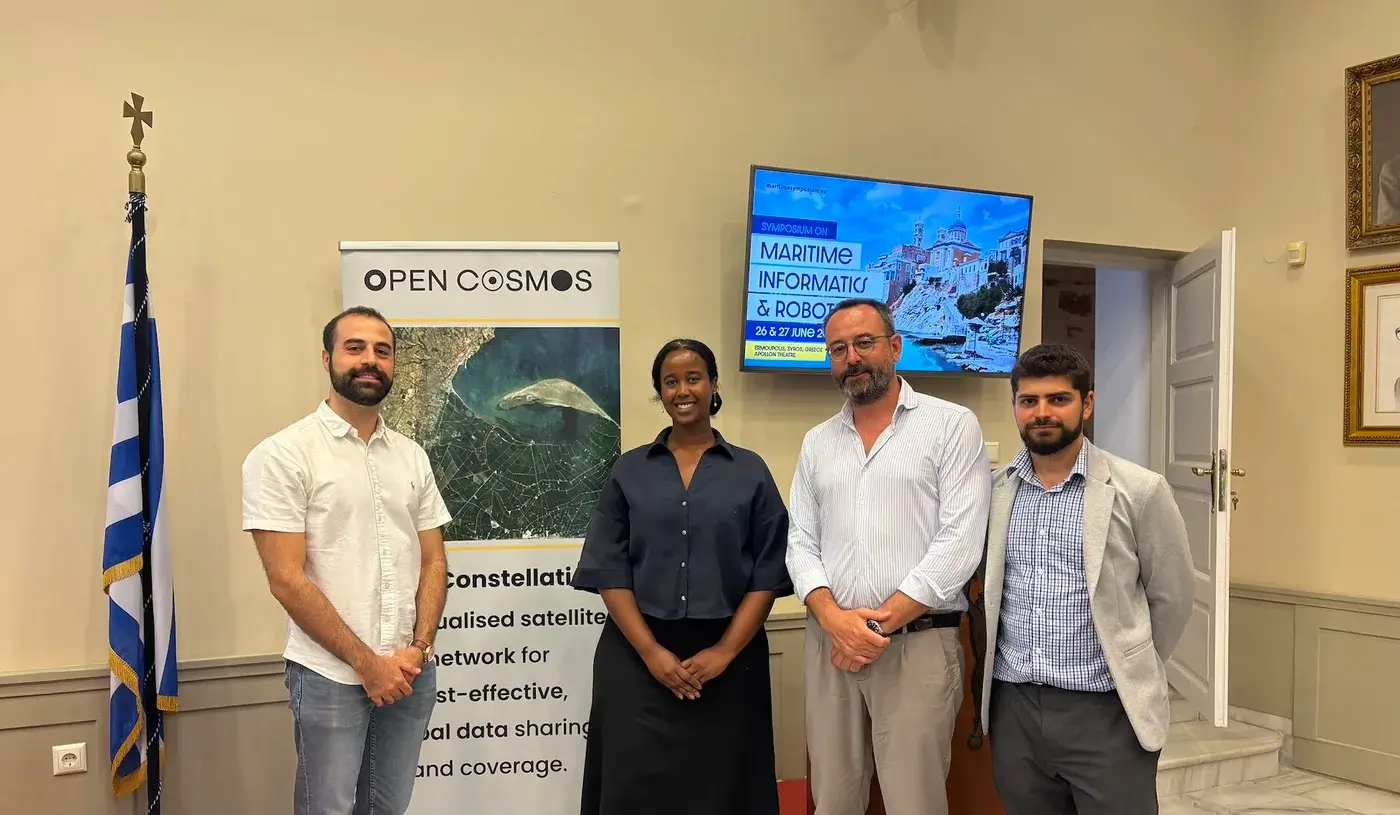
As part of the summer school experience, students attended the IEEE Symposium on Maritime Informatics & Robotics, held at Syros’ historic Apollo Theater on June 26-27. The symposium provided an opportunity to connect classroom learning with cutting-edge research presentations, exposing students to the latest developments in the field from leading international researchers.
Read more about the IEEE Symposium
Partners & Acknowledgments
The success of the 2025 Summer School was made possible through the support of our partners:
- 28DIGITAL – Main academic partner, with students primarily drawn from 28DIGITAL Master’s programmes in Autonomous Systems
- University of the Aegean – Host institution providing facilities, faculty, and organizational support
- Nautical Club of Syros (NOS) – Venue partner for sea trials and the Aegean RoBoat Race
- Municipality of Syros – Local government support for the event
Video: Summer School Highlights
Gallery
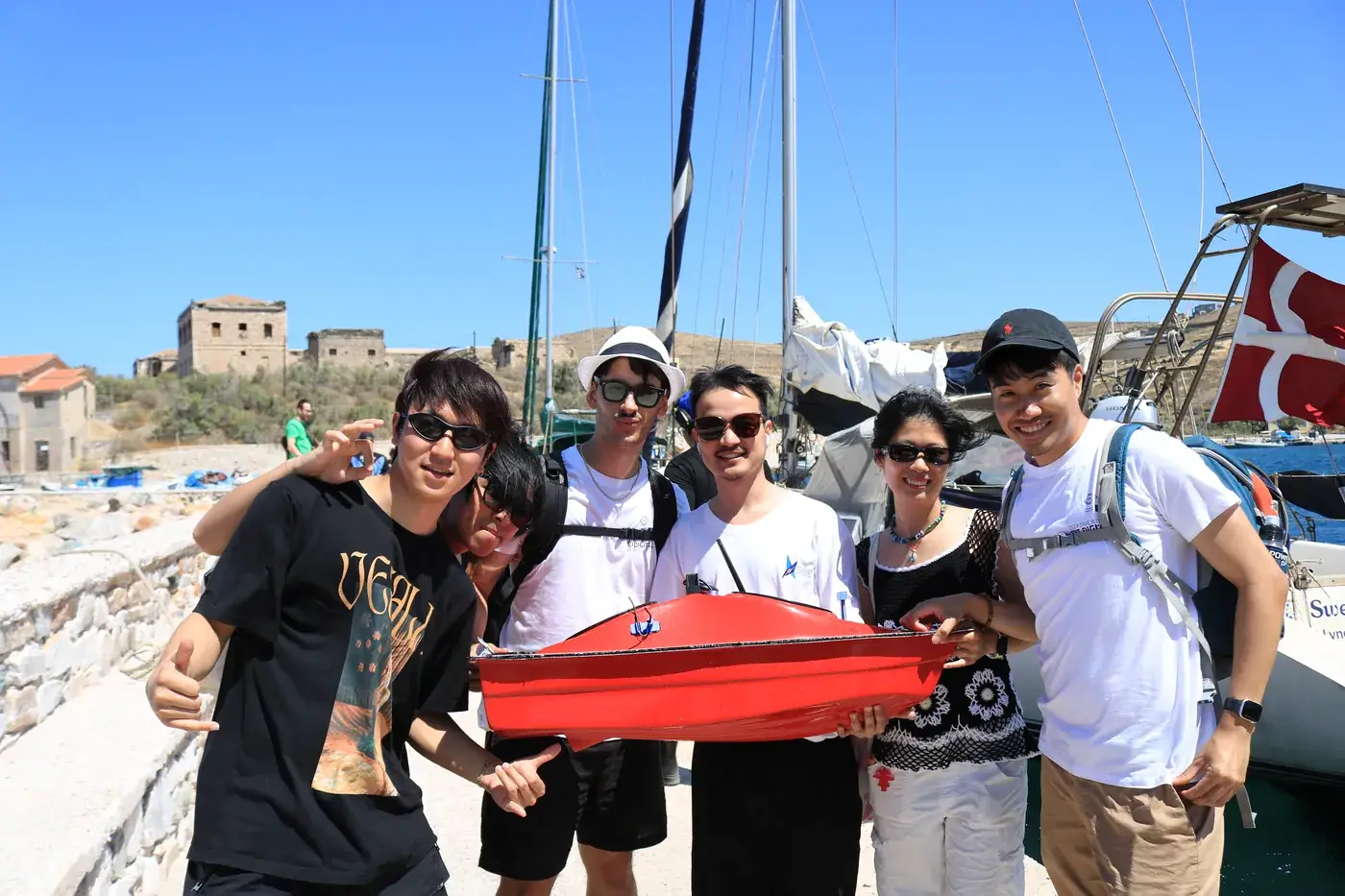
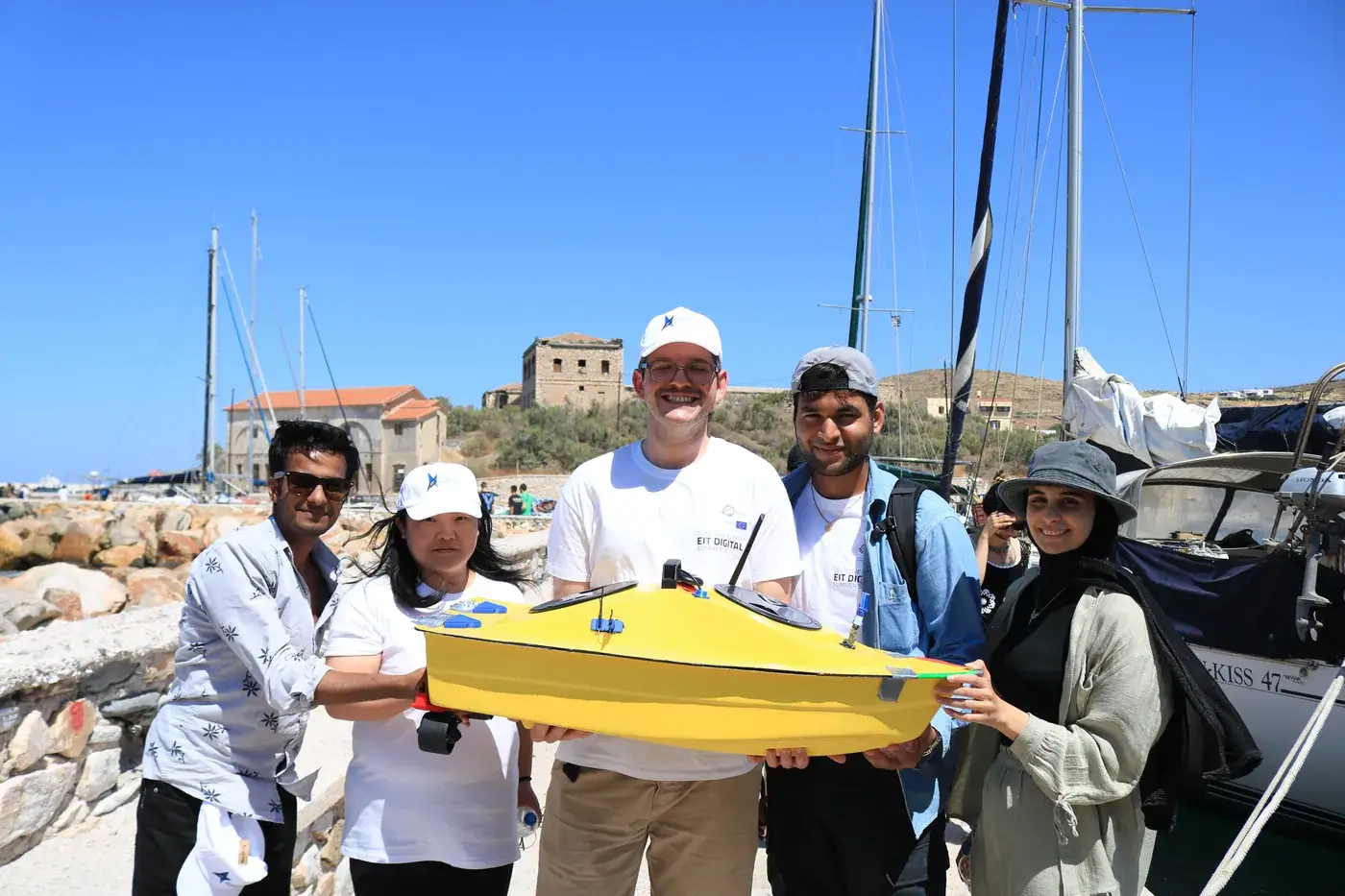
Highlights from the Maritime Informatics & Robotics Summer School 2025: from laboratory sessions and pool testing to sea trials and the Aegean RoBoat Race. Students assembled autonomous vessels, programmed navigation systems, and tested their creations in the waters around Syros.