Maritime Informatics & Robotics Summer School 2026
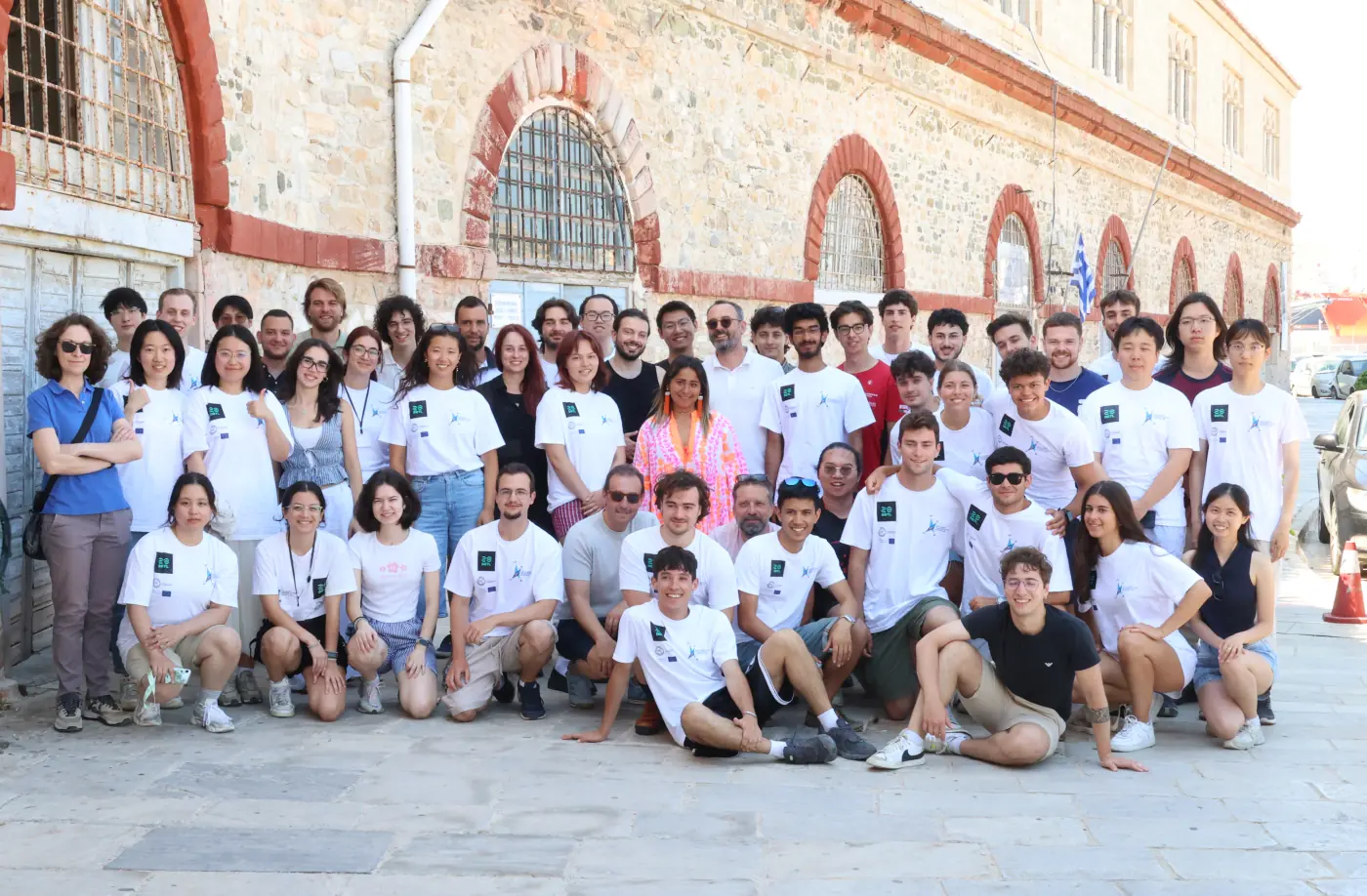
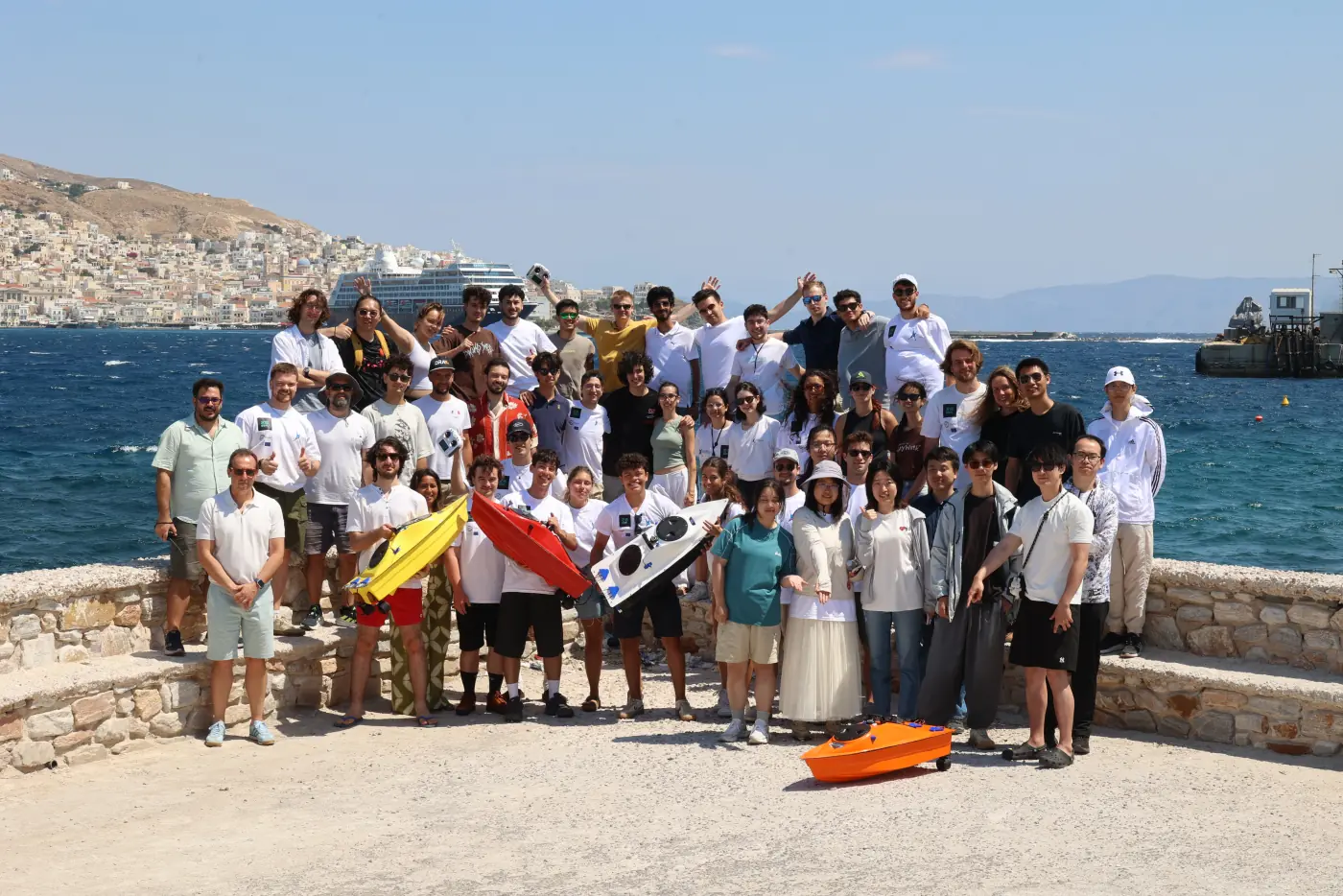
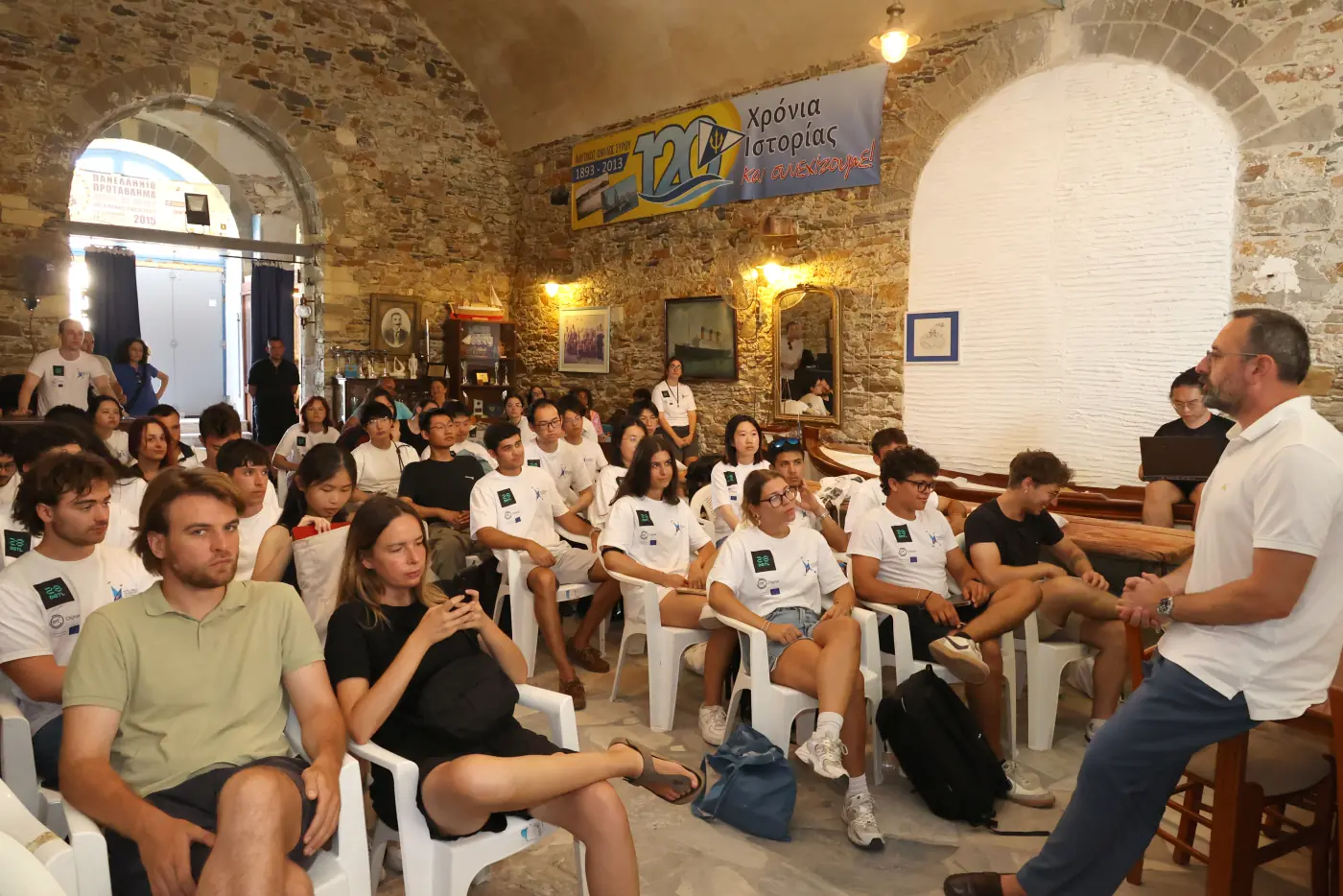
From June 29 to July 10, 2026, SmartMove Lab organized and ran the Maritime Informatics & Robotics Summer School 2026, welcoming approximately 45 students to the island of Syros. Over ten intensive days, participants worked their way from theory to open water: morning lectures by faculty and guest speakers, afternoon hands-on labs, pool tests, underwater robot trials, and finally real sea trials at the Ermoupolis marina.
The program, organized in partnership with 28DIGITAL (formerly EIT Digital), brought together an international group of students from backgrounds in computer science, engineering, and robotics. Students formed teams from day one and stayed in them throughout, so that every lecture and lab fed directly into a shared team goal: putting an autonomous vessel on the water by the end of the school.
Program Structure
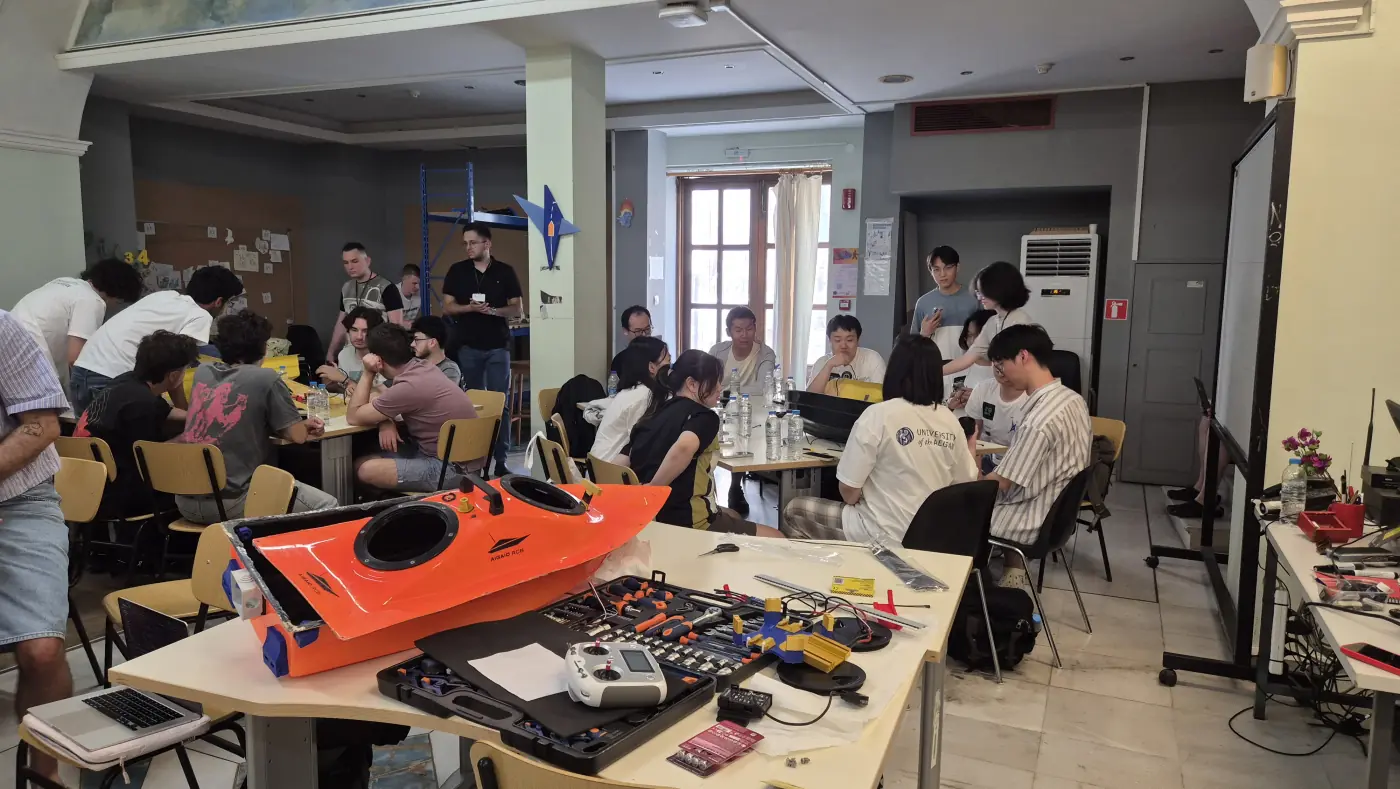
The school followed the format of previous editions: morning expert lectures paired with afternoon laboratory sessions, so that each day’s theory was immediately put into practice.
Lecture Topics
Each morning, students attended lectures from faculty and invited experts covering the breadth of maritime robotics:
- Motion Planning & Autonomous Navigation – How maritime robots decide where to go and how to get there safely
- Pose Estimation & Depth Mapping – Estimating a vehicle’s position and reconstructing its surroundings from camera data
- Event-Based Localization & Mapping – Localization techniques built on event-driven sensing
- Maritime Robotic Safety Systems – Keeping autonomous systems safe at sea
- Marine Remotely Operated Vehicles – Underwater robotics in practice, featuring a BlueROV fitted with a gripper
- Motion Control & ROS – Control foundations for marine robots and the Robot Operating System as middleware
- Visual Navigation – Computer vision techniques for autonomous vehicle guidance
Hands-On Laboratory Progression
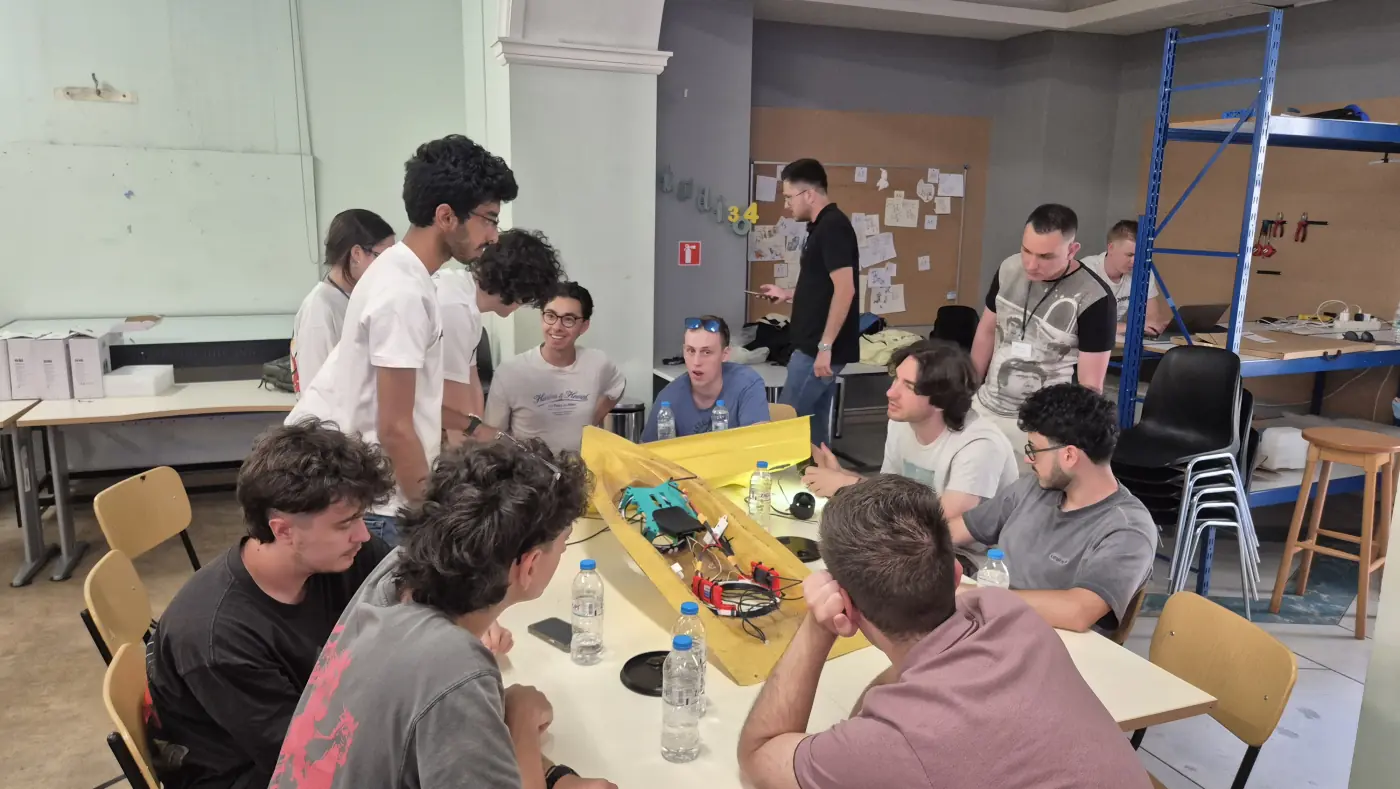
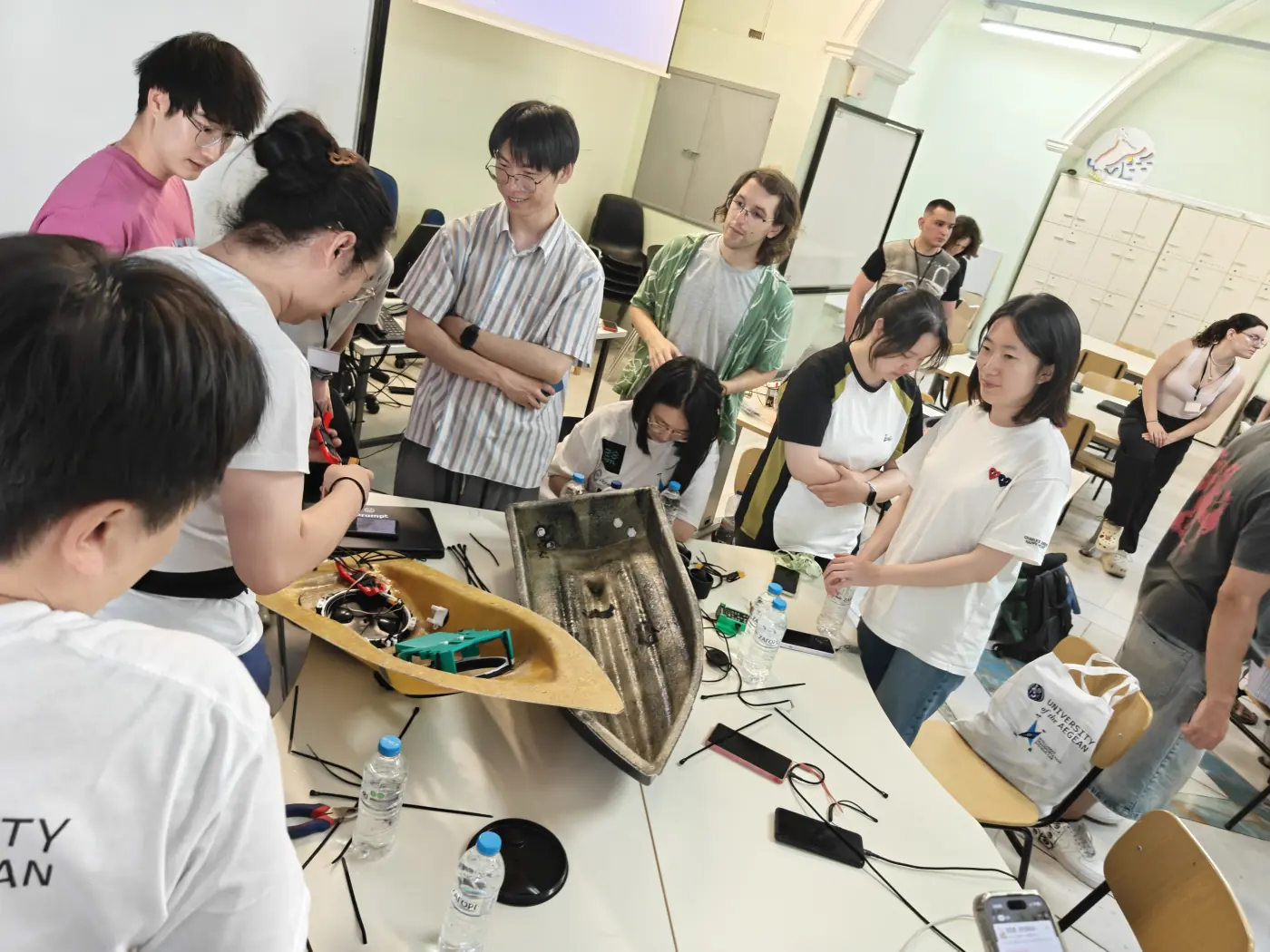
Afternoons were dedicated to a structured lab sequence that took teams from first setup to coordinated autonomous behavior:
- Team Building & Introduction – Forming teams and getting to know the vessel platforms
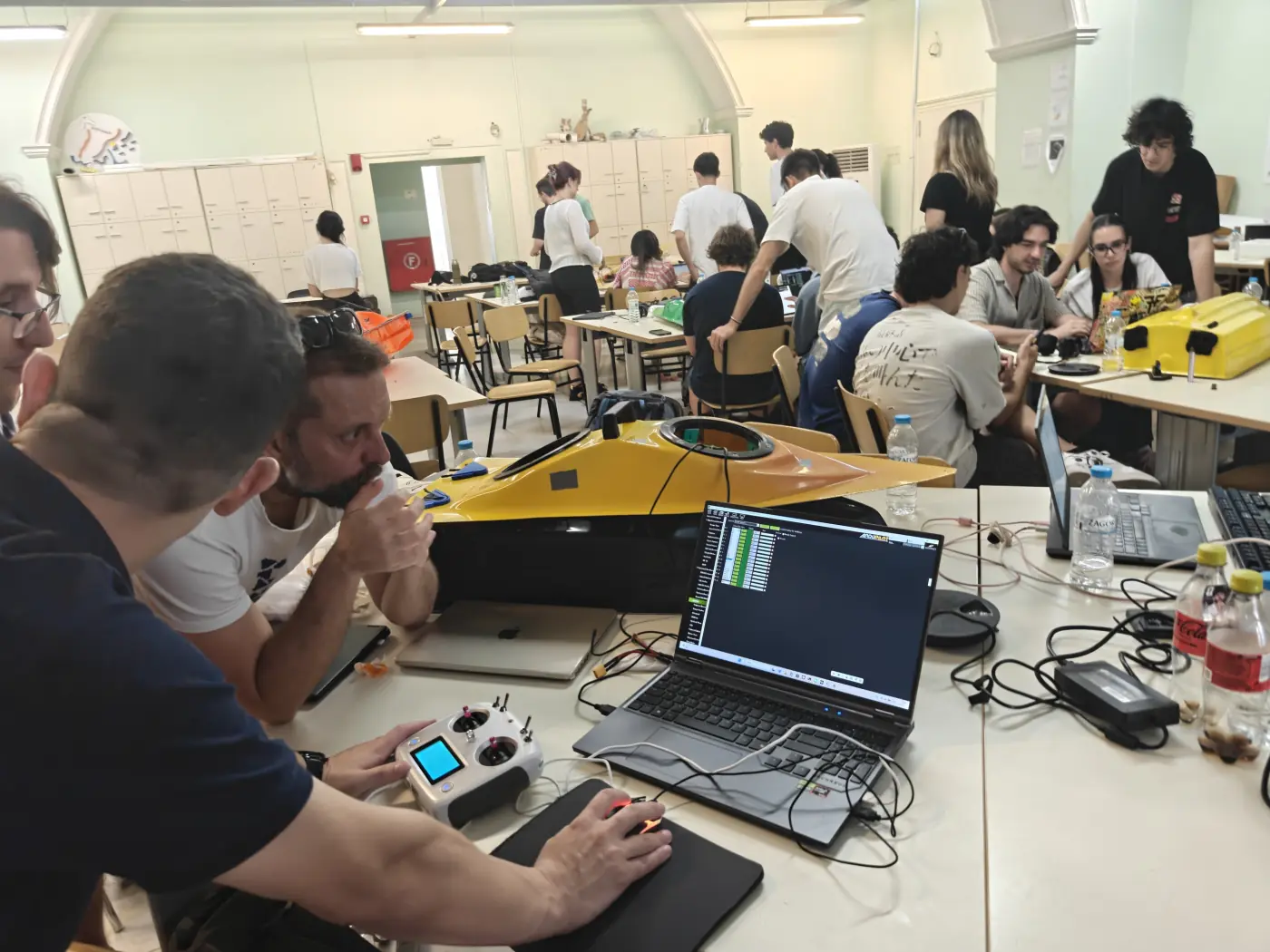
- ArduPilot & Mission Planner – Installing autopilot firmware, configuring the systems, and understanding telemetry logging
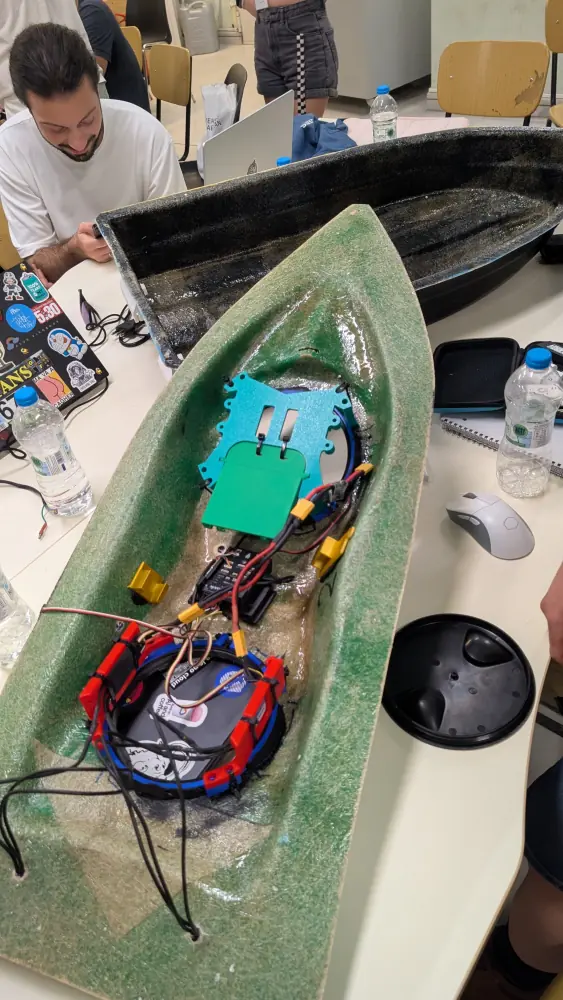
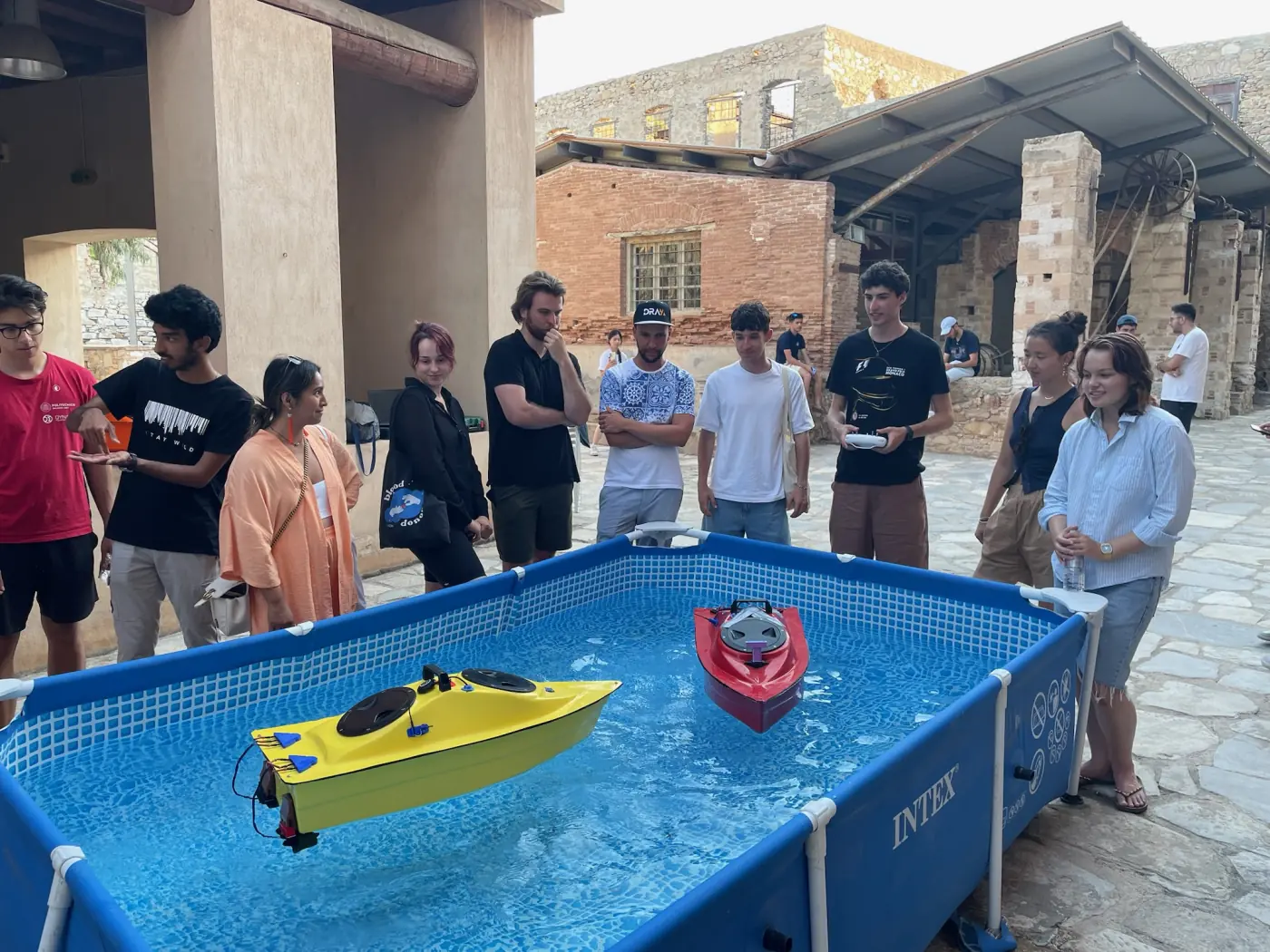
- RC Setup & Parameter Tuning – Radio control configuration, flight-mode setup, and parameter tuning, followed by team pool tests
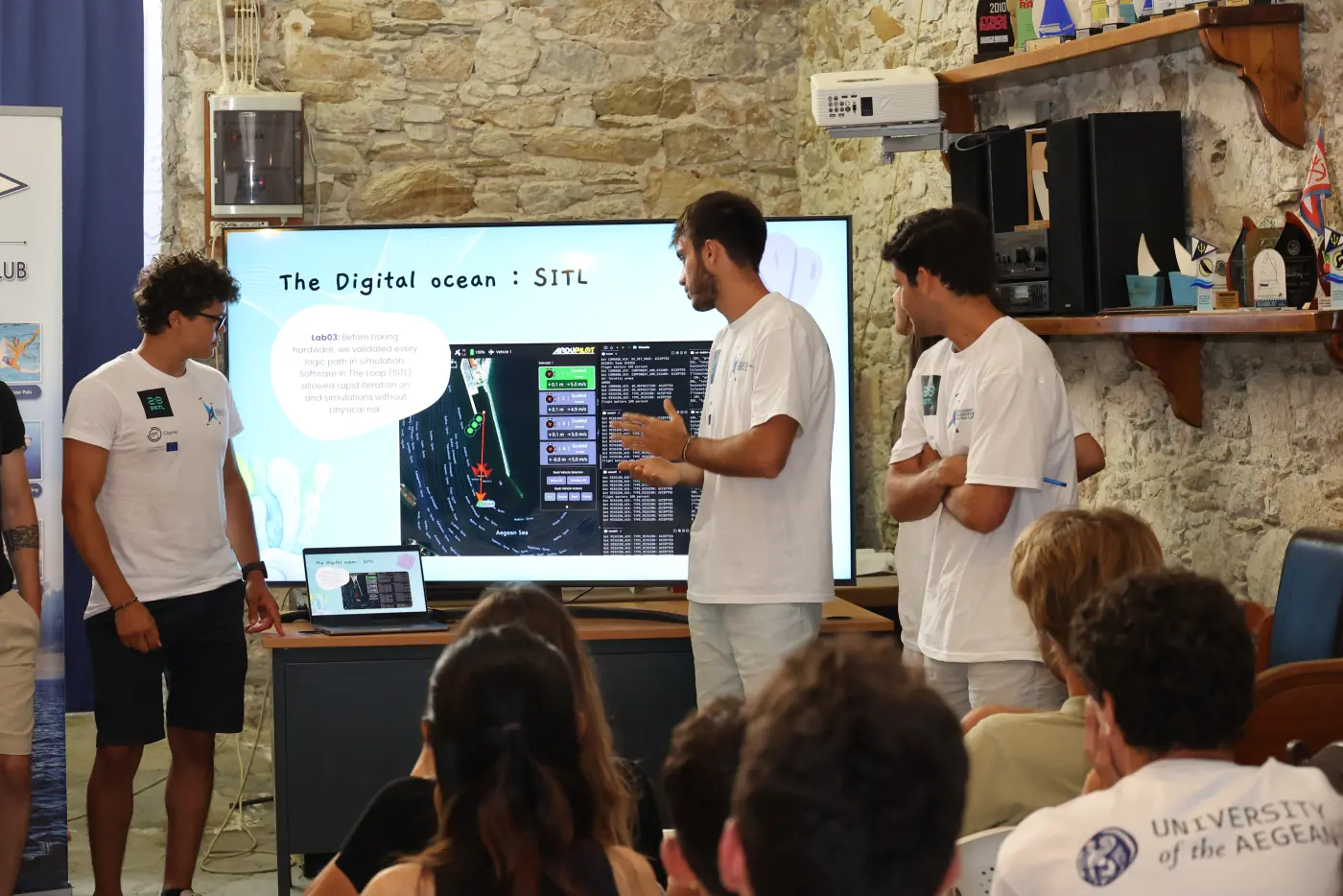
- Software-in-the-Loop (SITL) Simulation – Every student ran their own simulated boat, taking it through guided and fully autonomous missions, including missions in simulated Meltemi weather
- Companion Computer Integration – Connecting a Raspberry Pi 5 onboard computer to the autopilot and programming it in Python
- Sensors & Collision Avoidance – Custom navigation logic, sensor integration, and safety constraints
From Simulation to Sea
The goal was to take each team from a simulated boat to a real one in ten days.
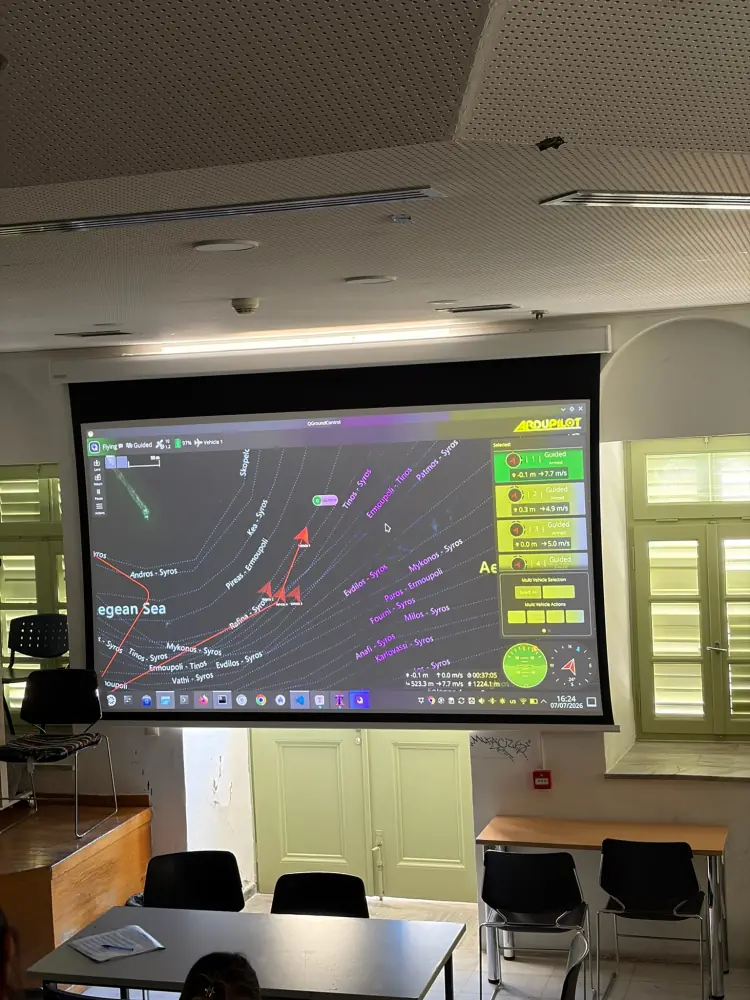
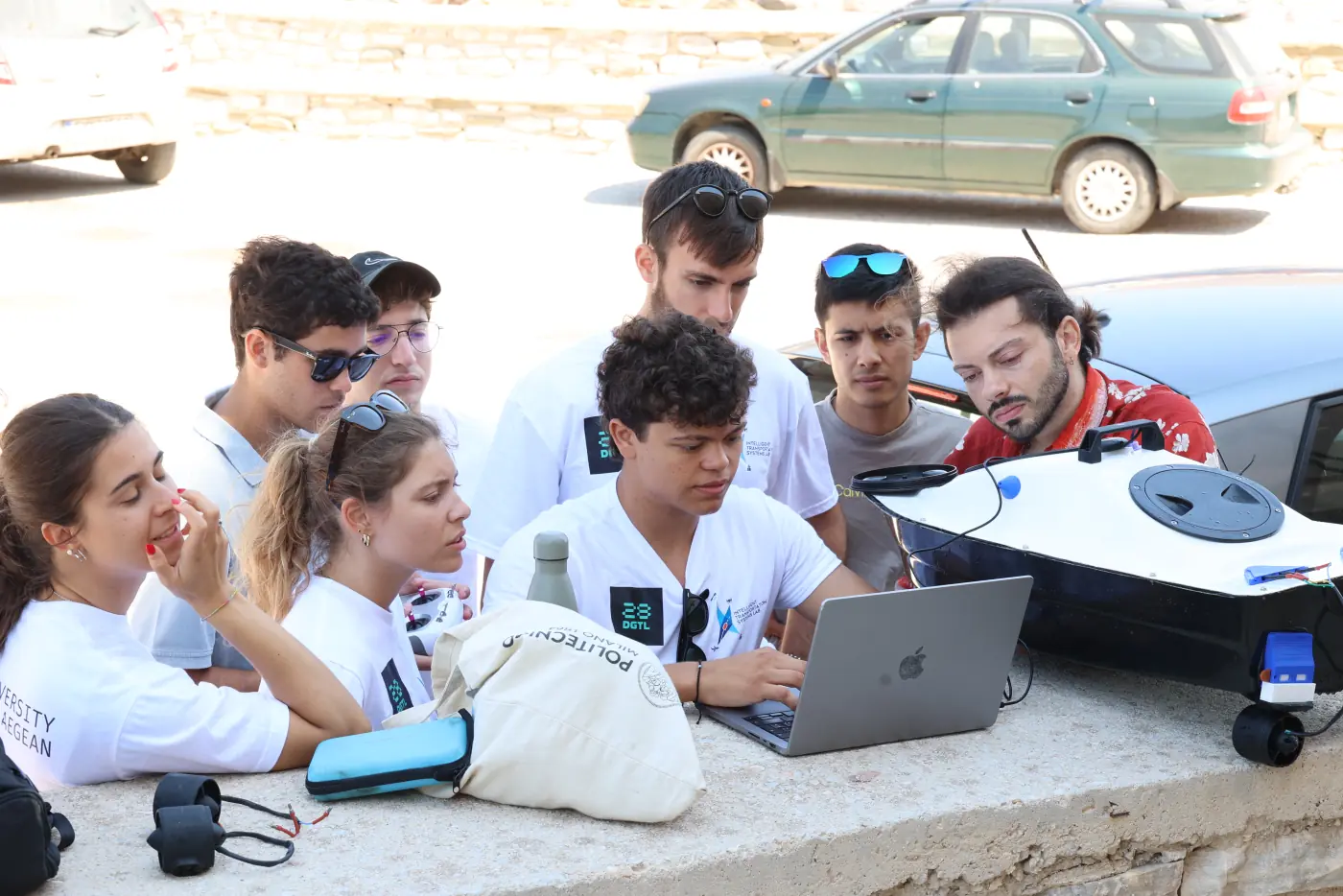
Much of that distance was covered in simulation. In the SITL environment, every student commanded their own virtual vessel, planning missions and watching their code succeed or fail with no risk to hardware. Teams then moved on to fleet behaviors, programming their companion computers to read live telemetry, share it over the network, and coordinate multiple simulated vessels in follow-the-leader and formation-keeping patterns. A shared fleet map in the lab showed every team’s boats moving together over a chart of Syros, a moment that reliably drew the whole room to one screen.
Pool Tests, ROV Trials & Sea Trials
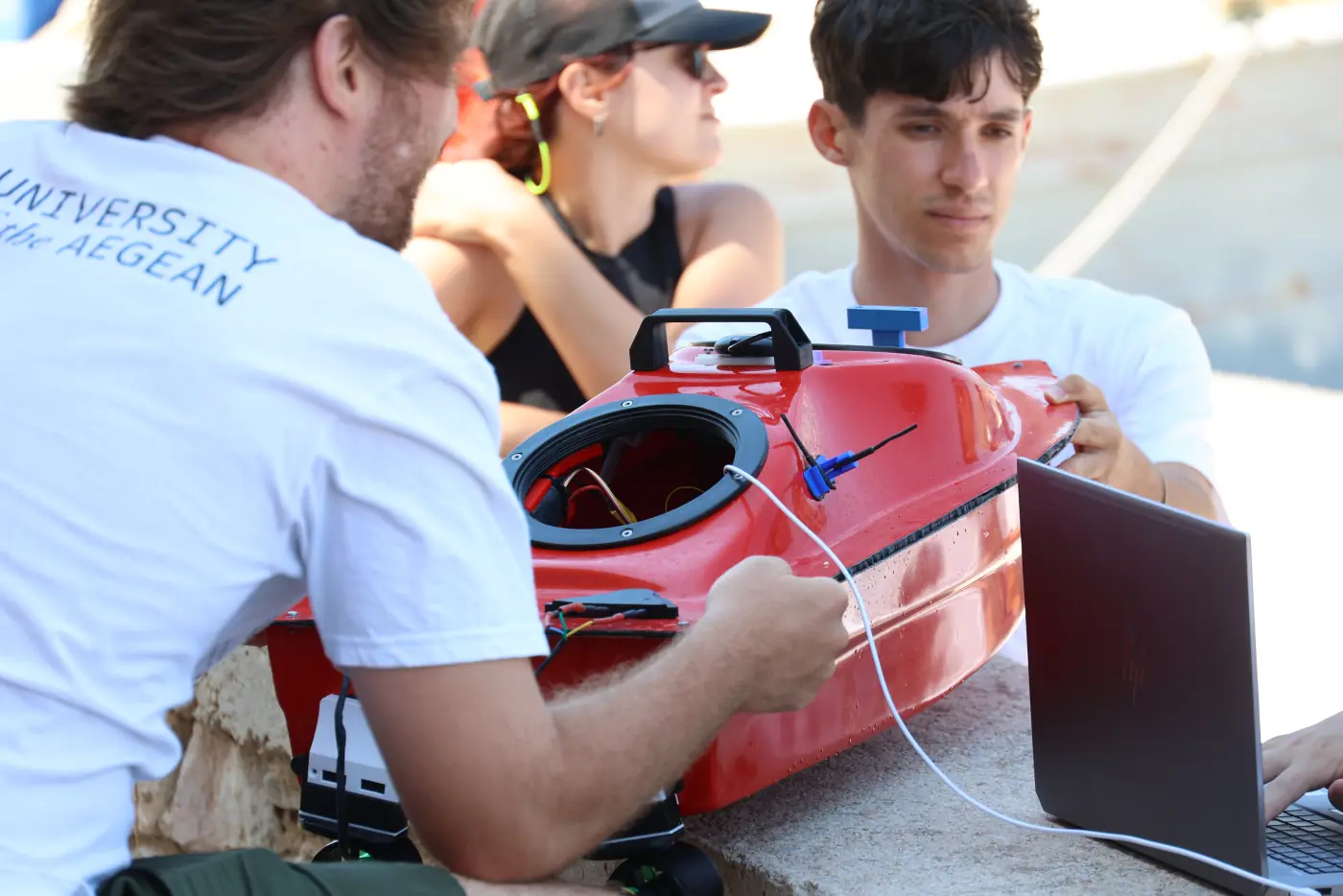
Between simulation and sea came the pool, where teams validated radio control, tuning, and basic behavior in a controlled setting. A dedicated day of sea trials with the BlueROV gave students hands-on time with a remotely operated underwater vehicle.
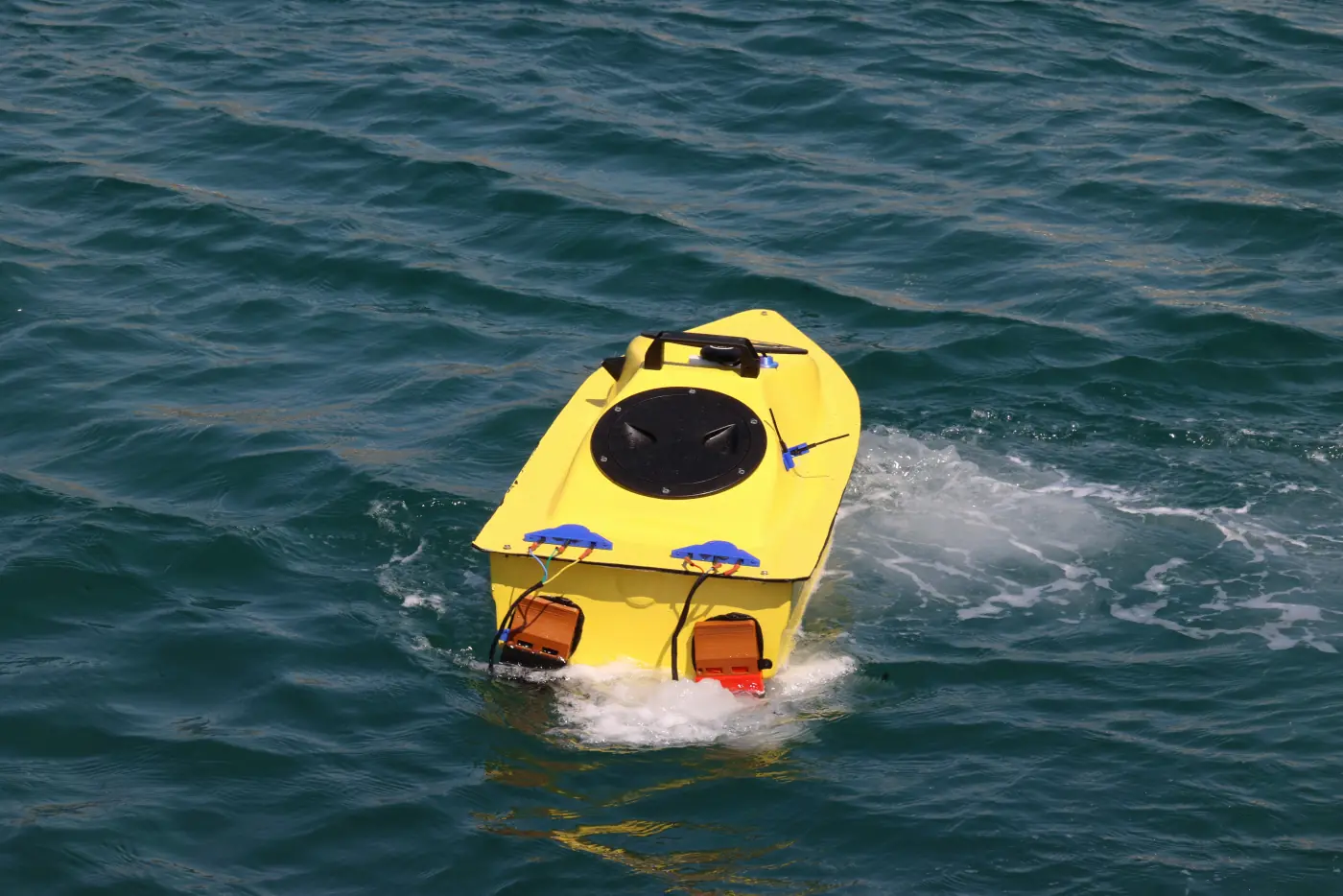
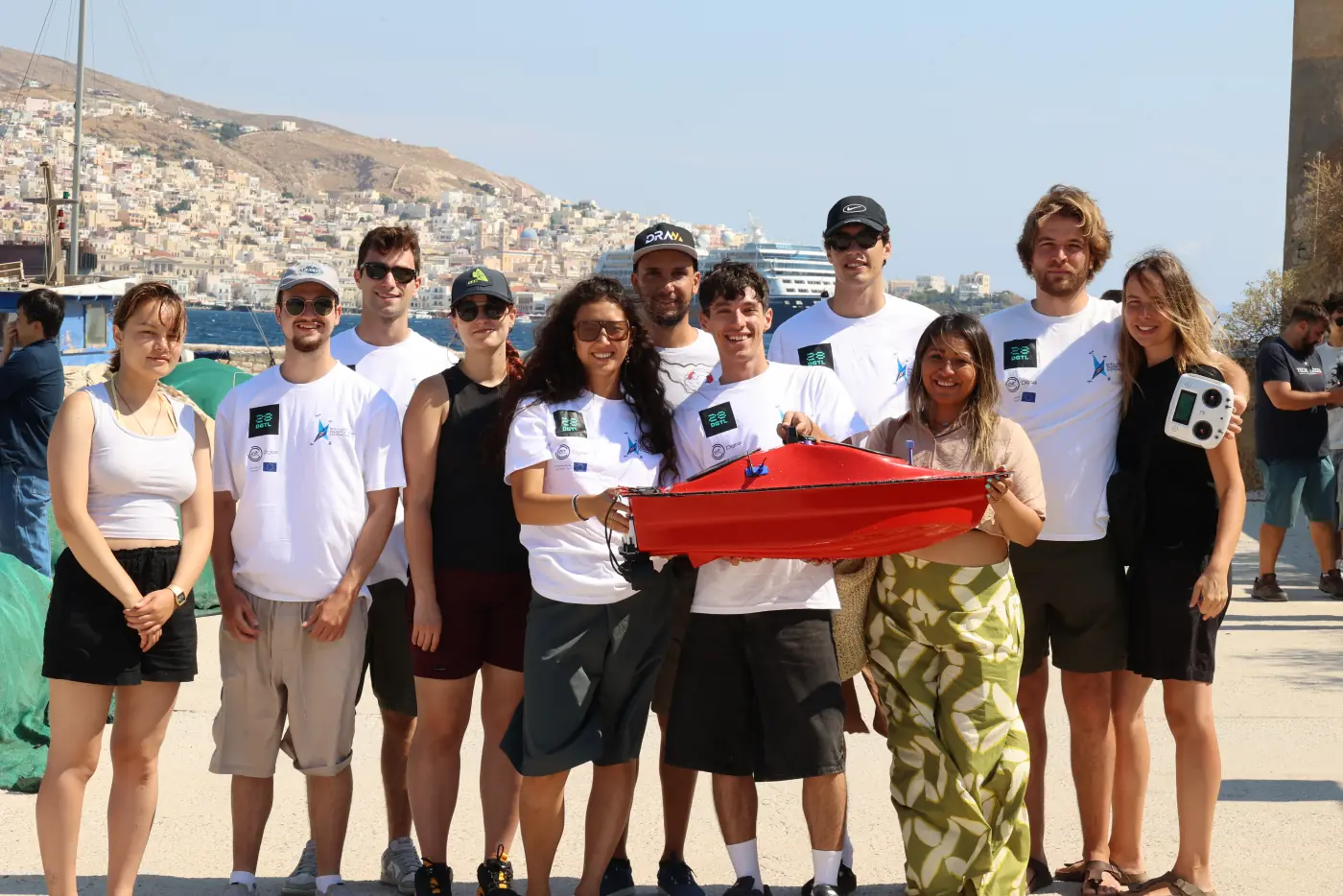
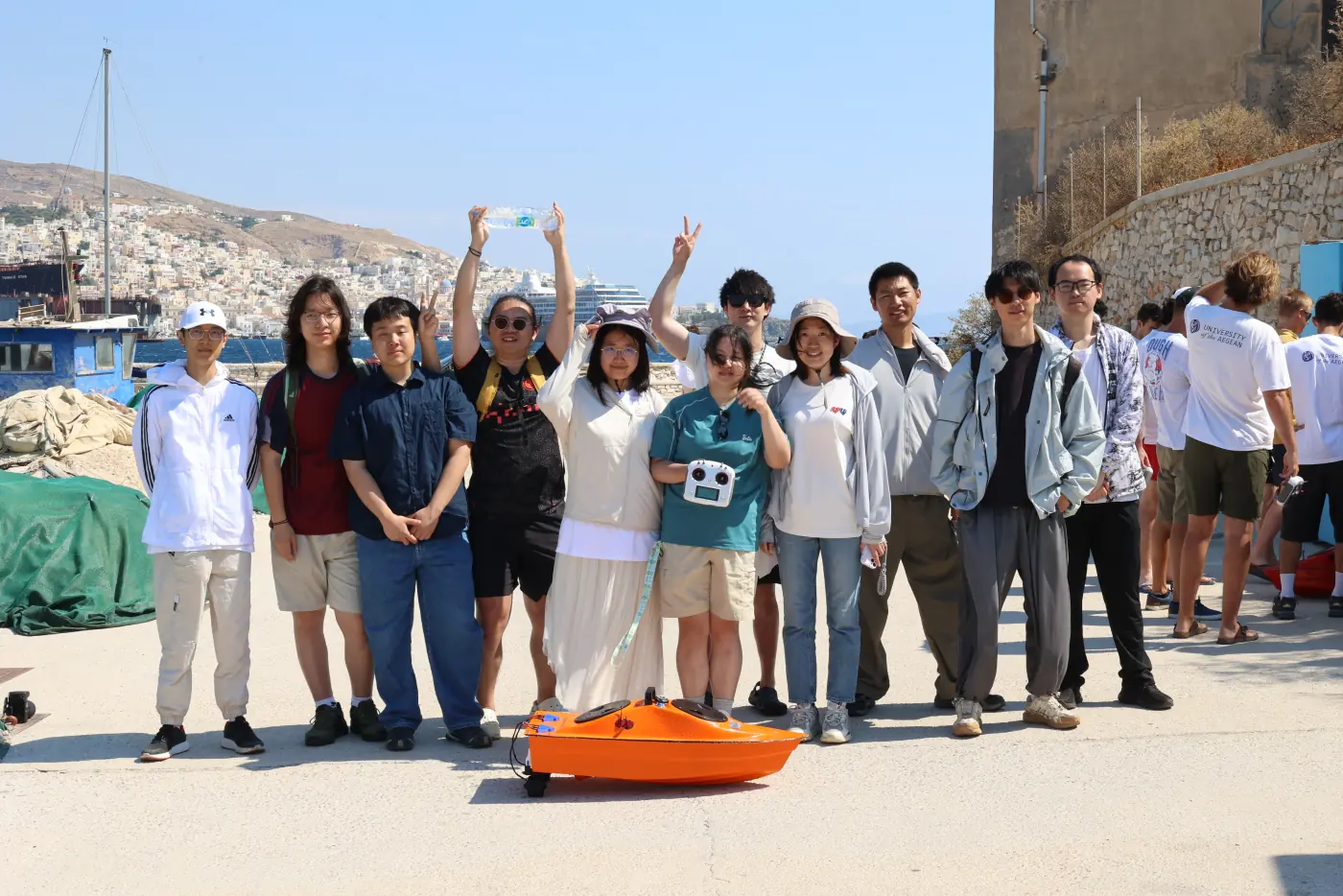
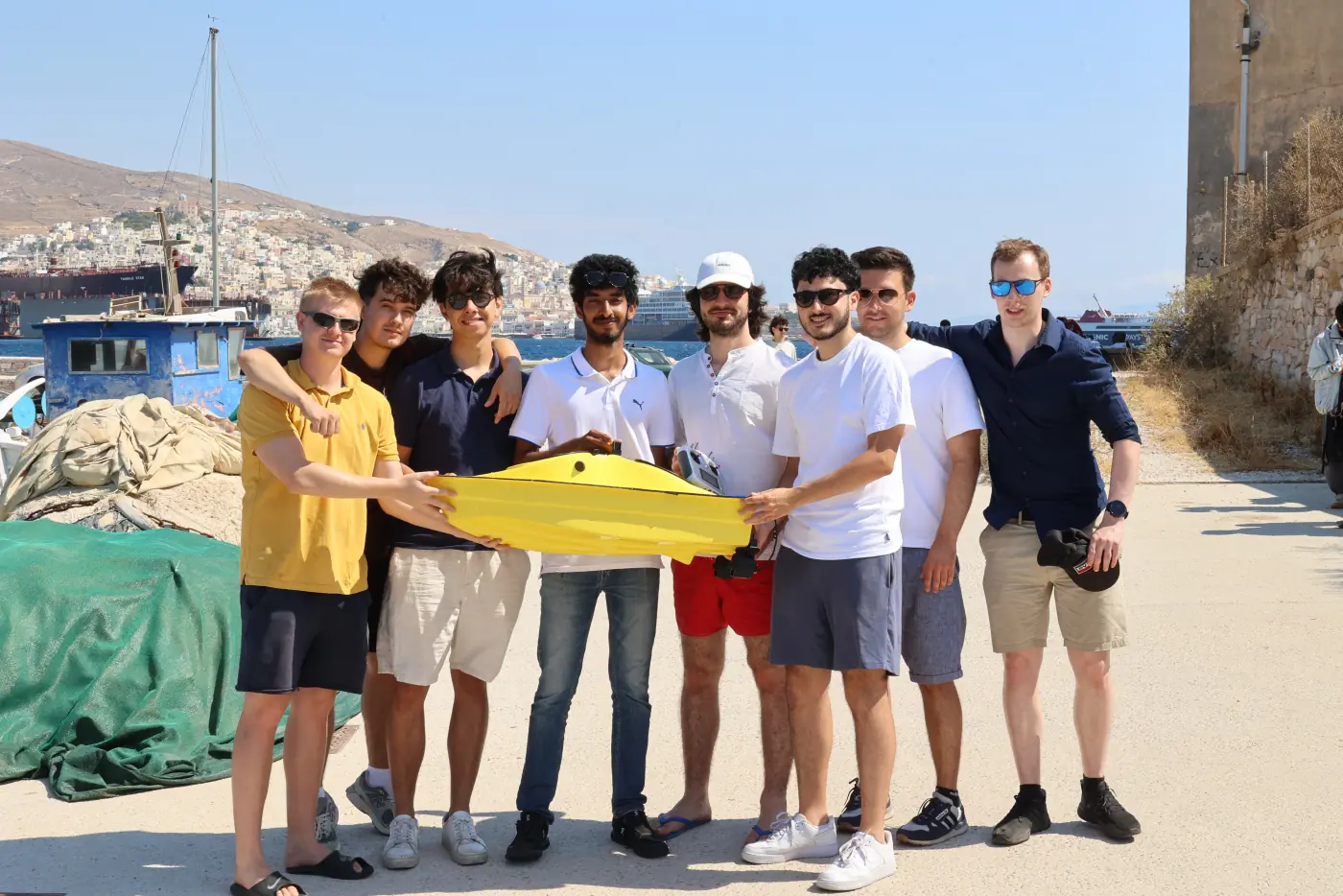
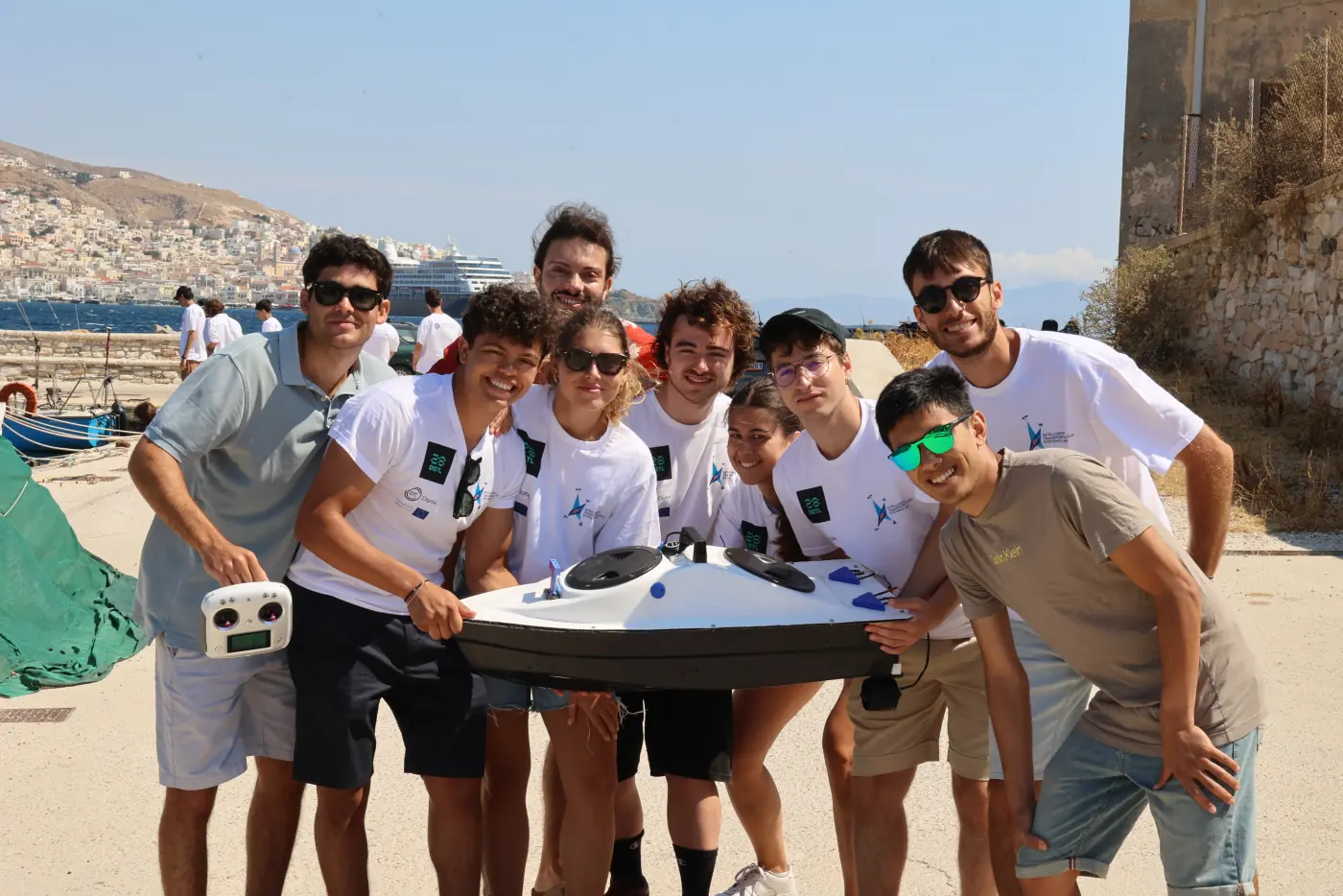
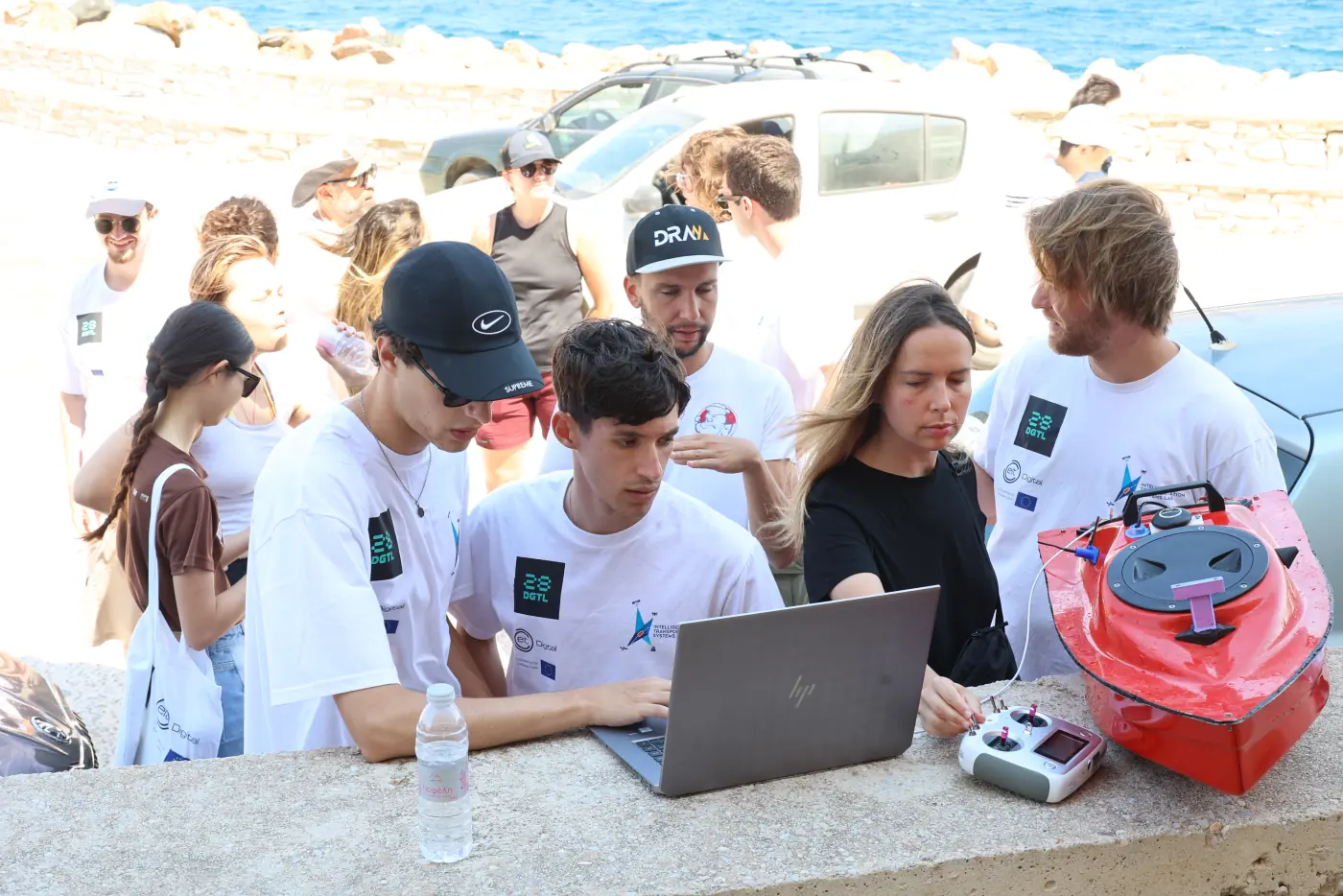
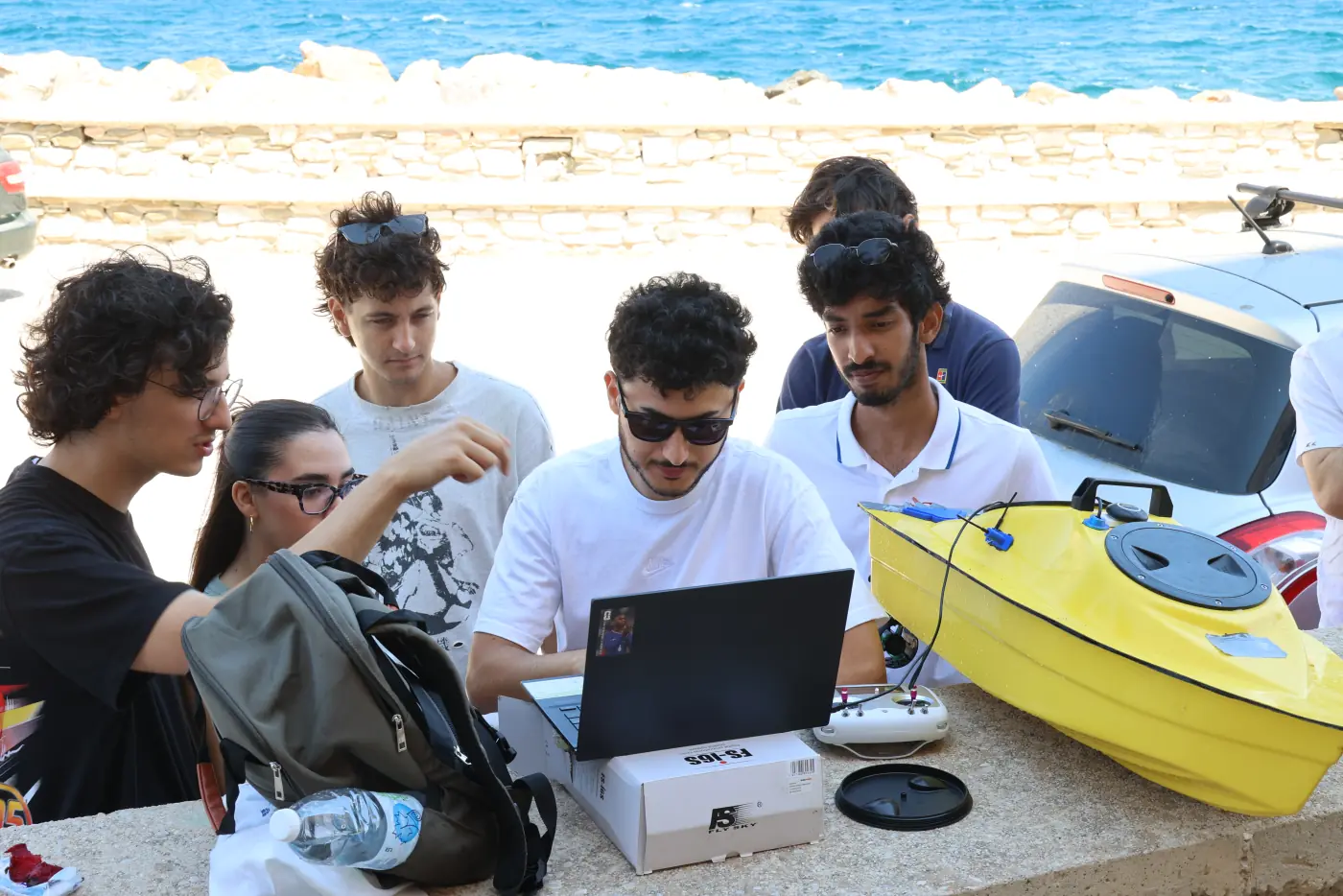
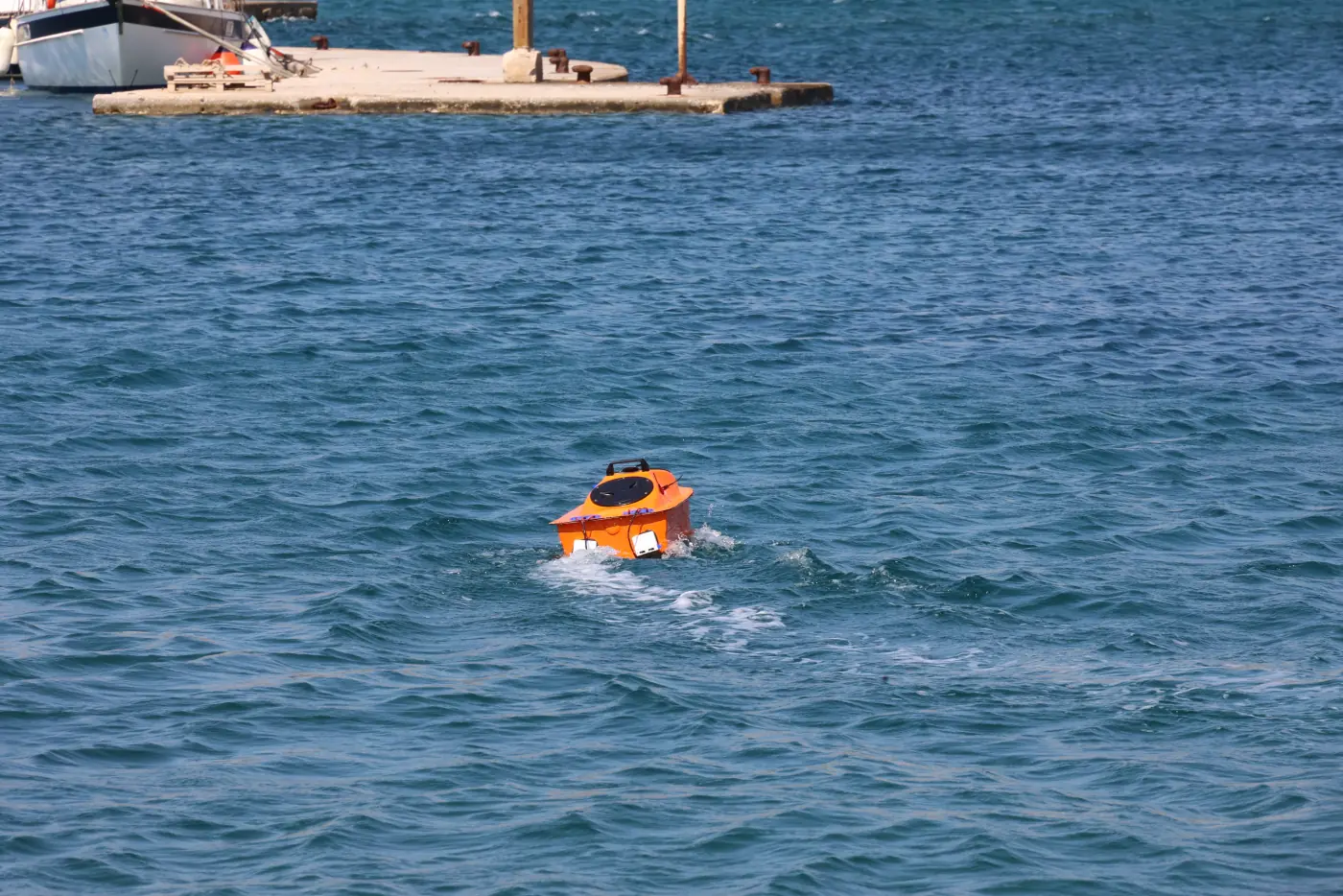
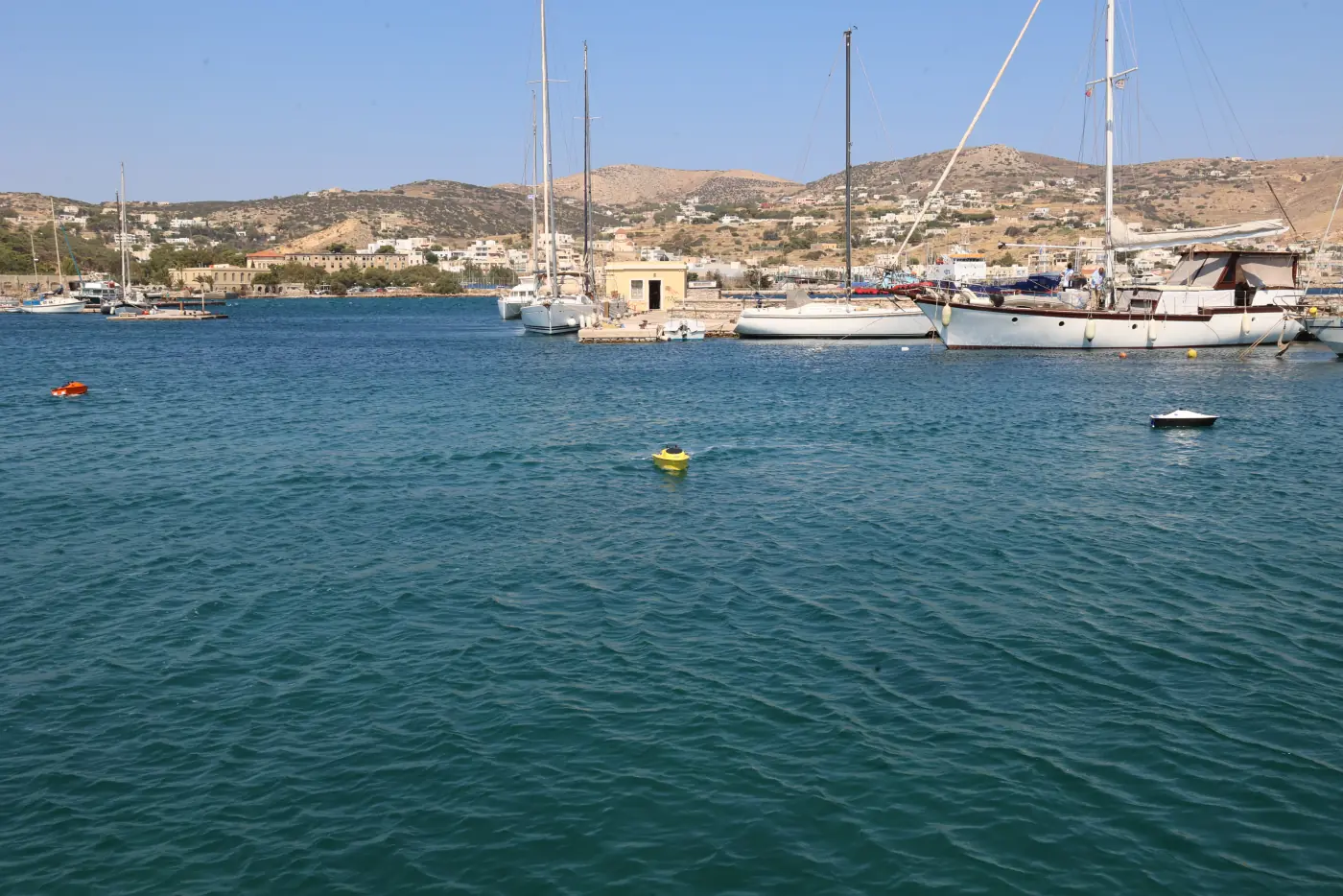
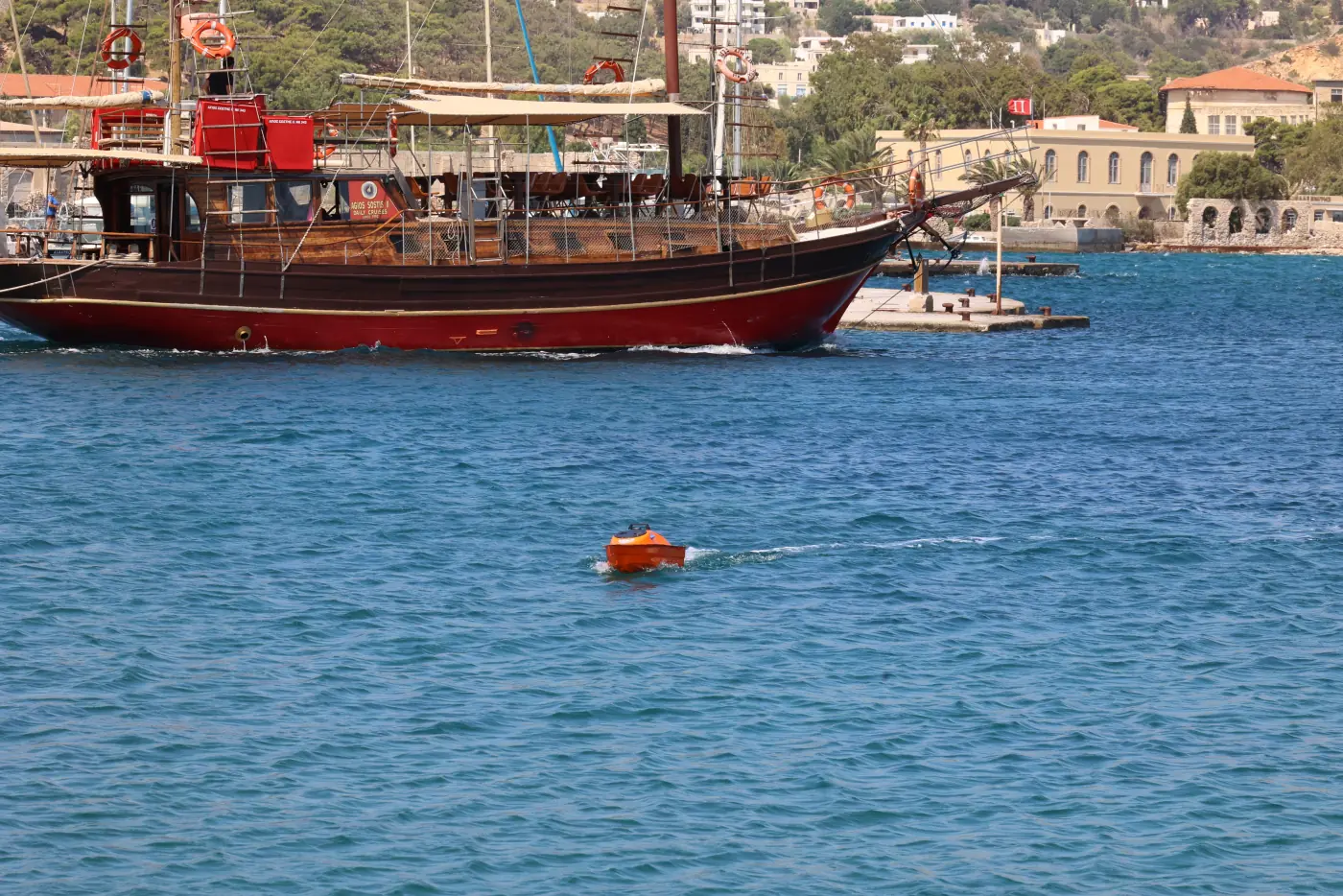
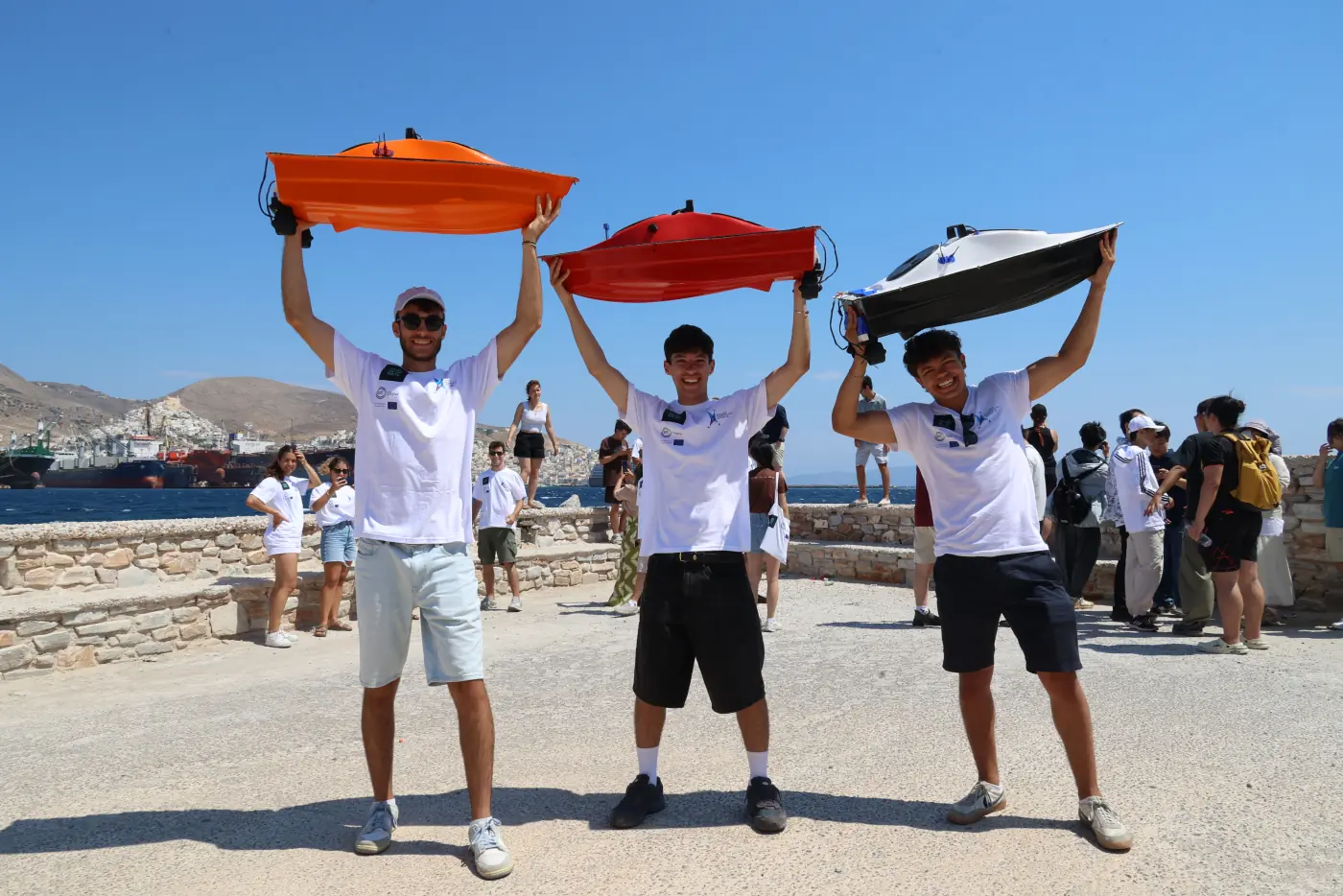
Then came the headline day: sea trials at the Ermoupolis marina, where the lab keeps a waterfront workspace with the vessels, tools, and equipment just a few metres from the water. Teams put the lab’s real vessels on the water, drove them in manual mode, and then loaded and executed autonomous missions they had planned themselves in Mission Planner. Watching a mission drawn on a laptop screen play out on real Aegean water was the moment the whole school had been building toward. After a series of successful runs the Meltemi made its real-world appearance, with the wind picking up strongly enough to call time on the session.
Beyond the Lab
The school also made time for the maritime world around it. On Saturday, students visited NAVIRA for a talk tracing the journey from sailboats to steamships to the present day, followed by a guided tour of the ONEX Shipyard, one of the largest shipyards in Greece. Earlier in the week, the Municipality of Syros hosted a social evening for participants at the Town Hall, one of Ermoupolis’ most emblematic buildings.
Closing Day at the Nautical Club
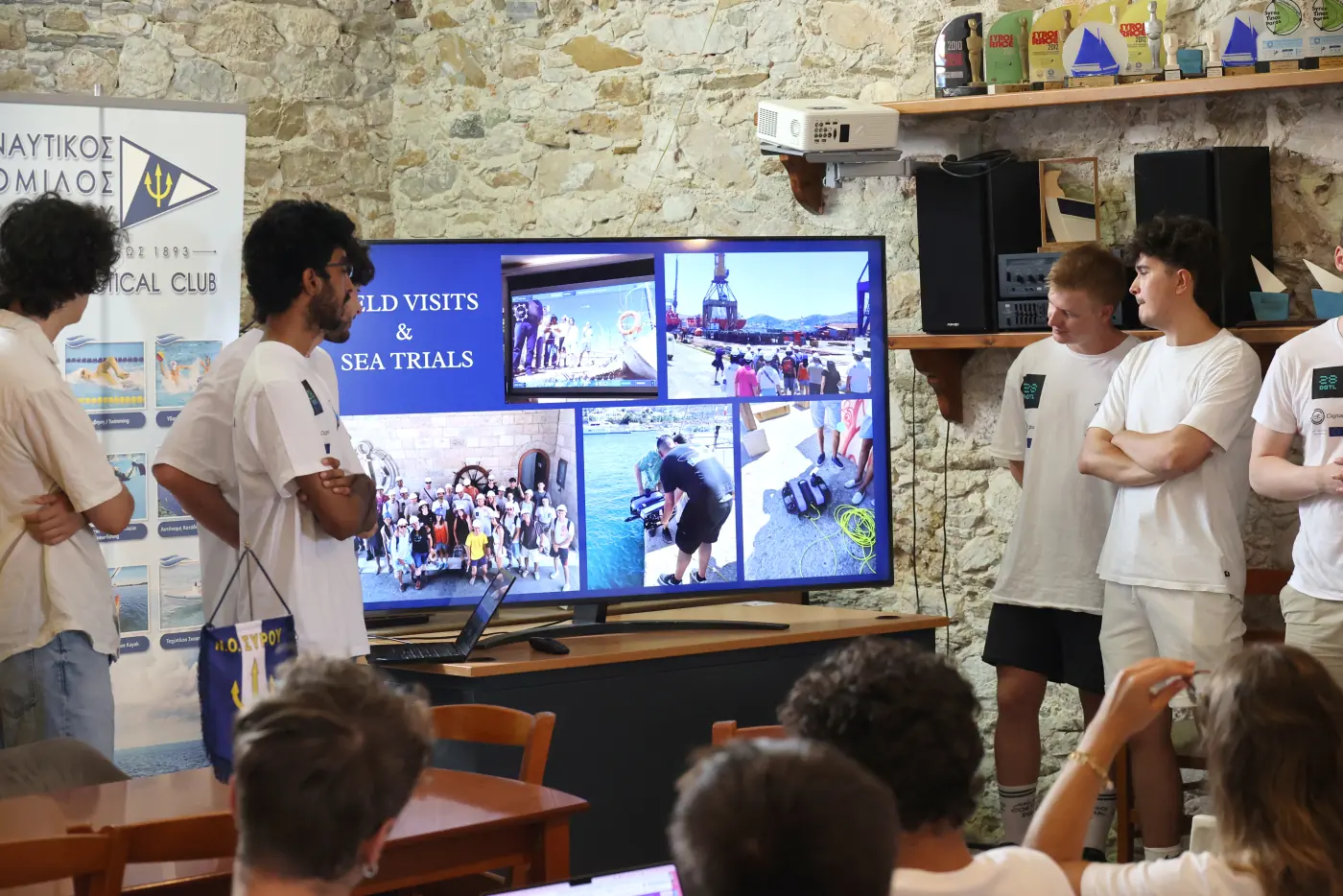
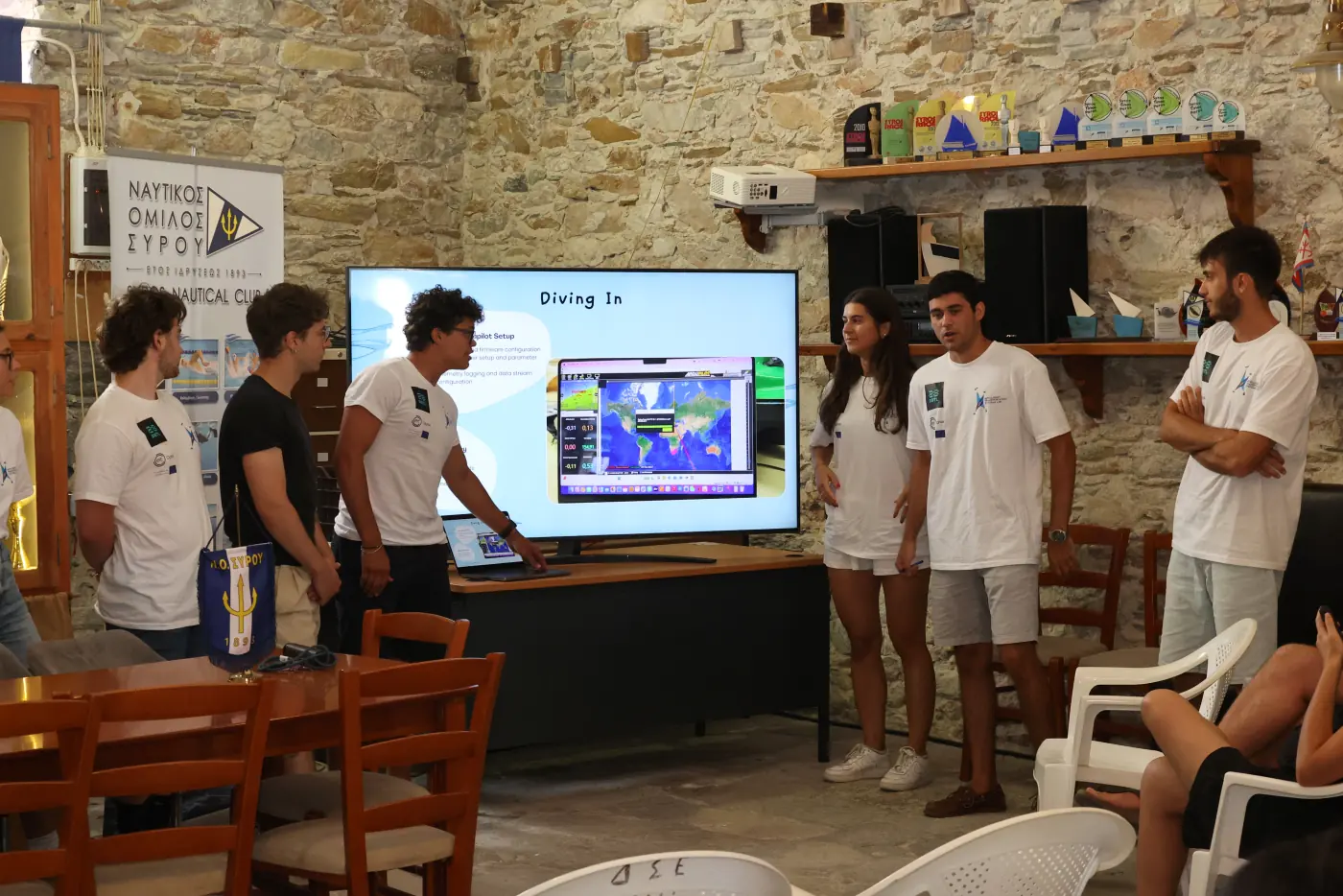
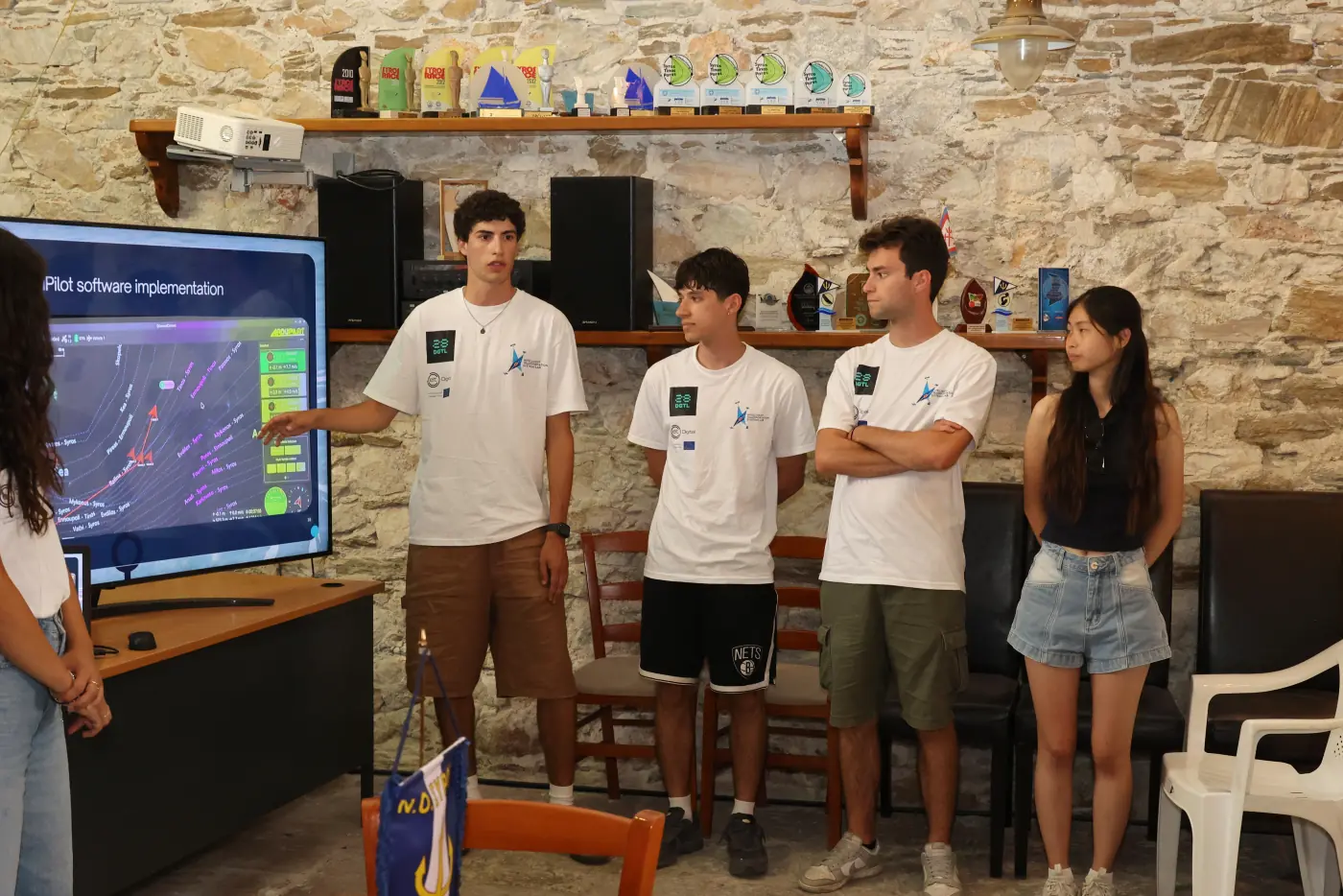
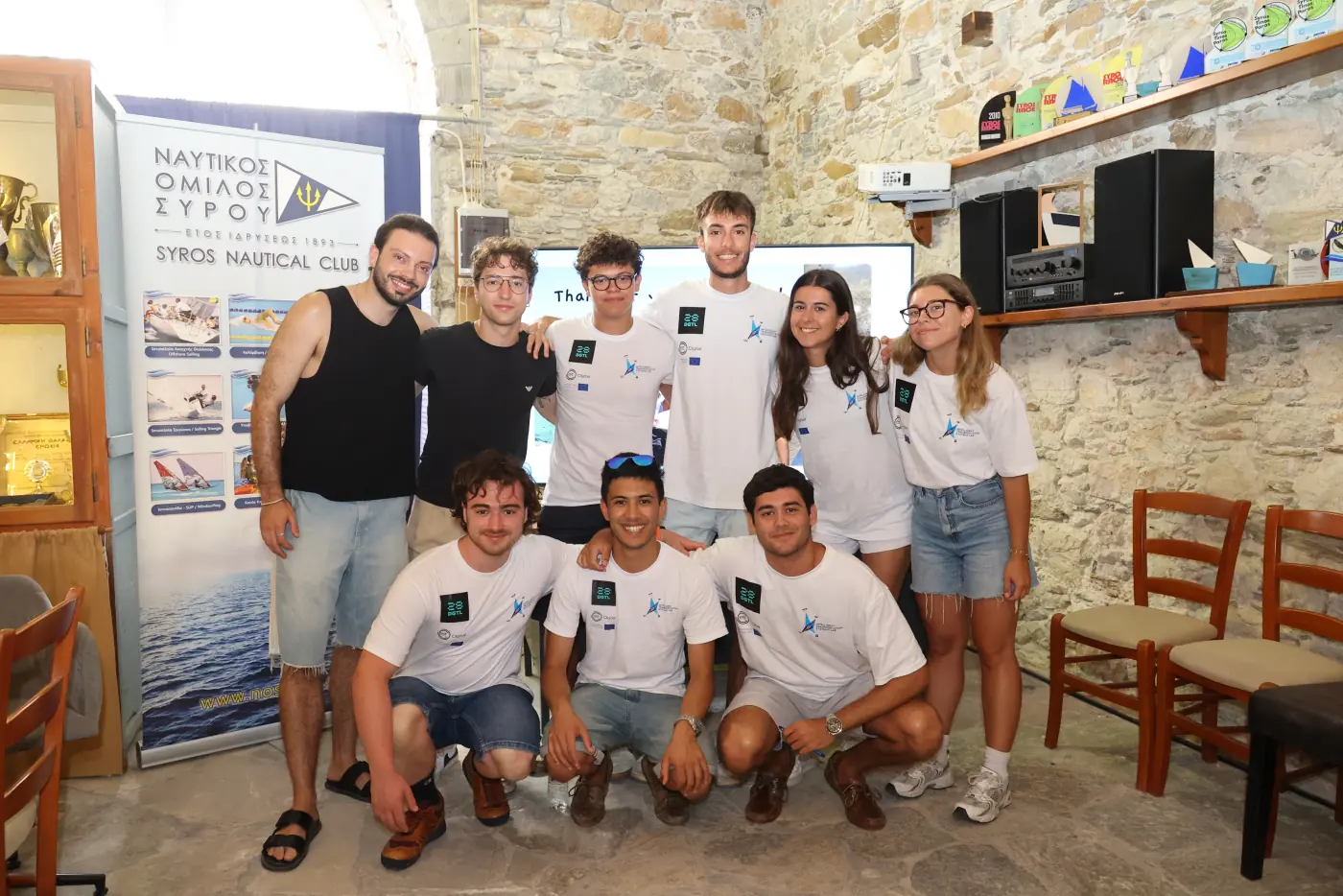
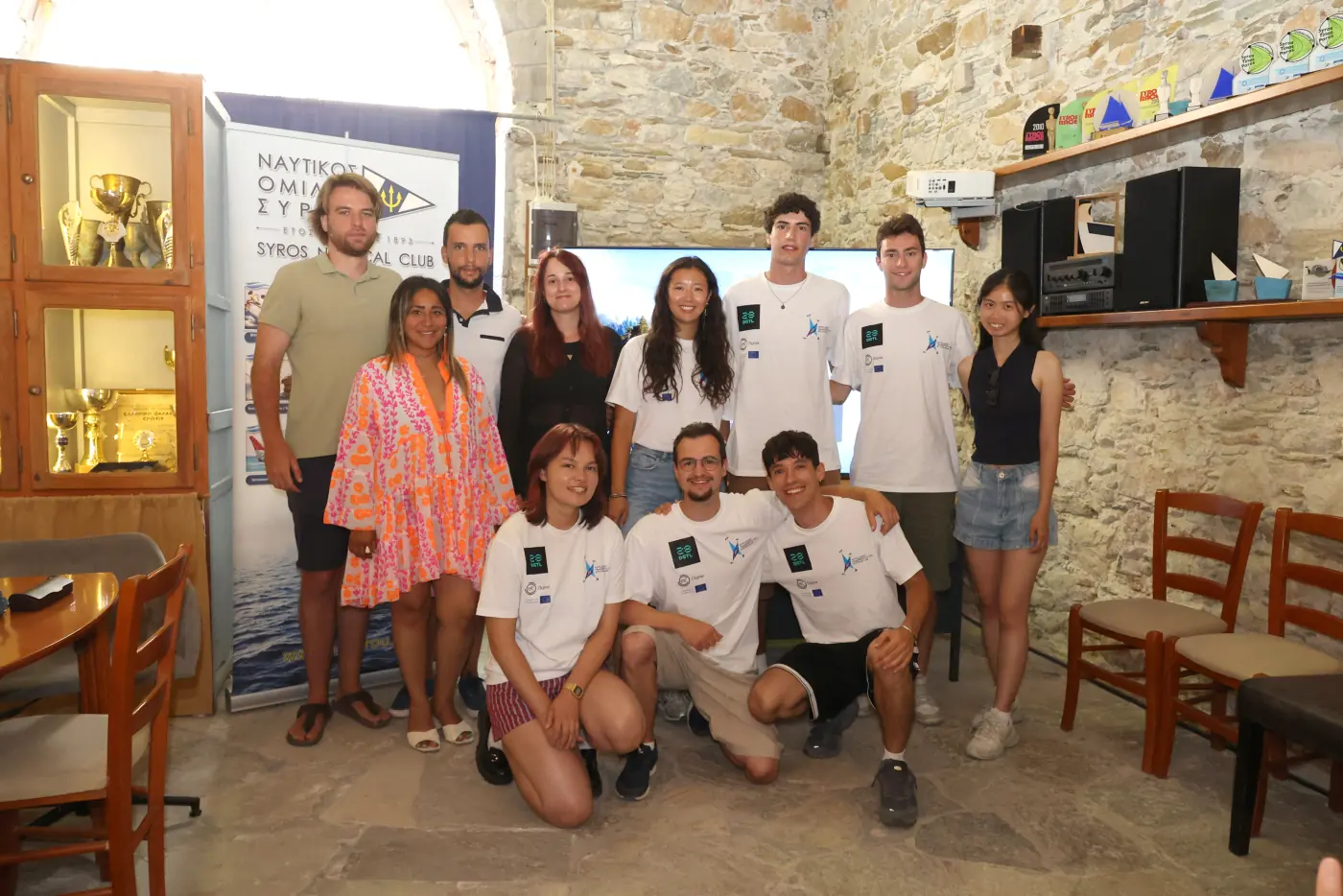
The school concluded on July 10 at the Nautical Club of Syros, where teams presented their work: what they built, what broke, what they fixed, and what they would do next. The presentations captured the character of the whole school, equal parts engineering report and adventure story, and closed ten days that took an international group of students from their first autopilot configuration to autonomous missions on the Aegean.
Partners & Acknowledgments
The success of the 2026 Summer School was made possible through the support of our partners:
- 28DIGITAL – Main academic partner, with students primarily drawn from 28DIGITAL Master’s programmes in Autonomous Systems
- University of the Aegean – Host institution providing facilities, faculty, and organizational support
- Nautical Club of Syros (NOS) – Venue partner for the closing event and team presentations
- Municipality of Syros – Local government support, including hosting the social evening at the Town Hall
Video: Summer School Highlights
Gallery
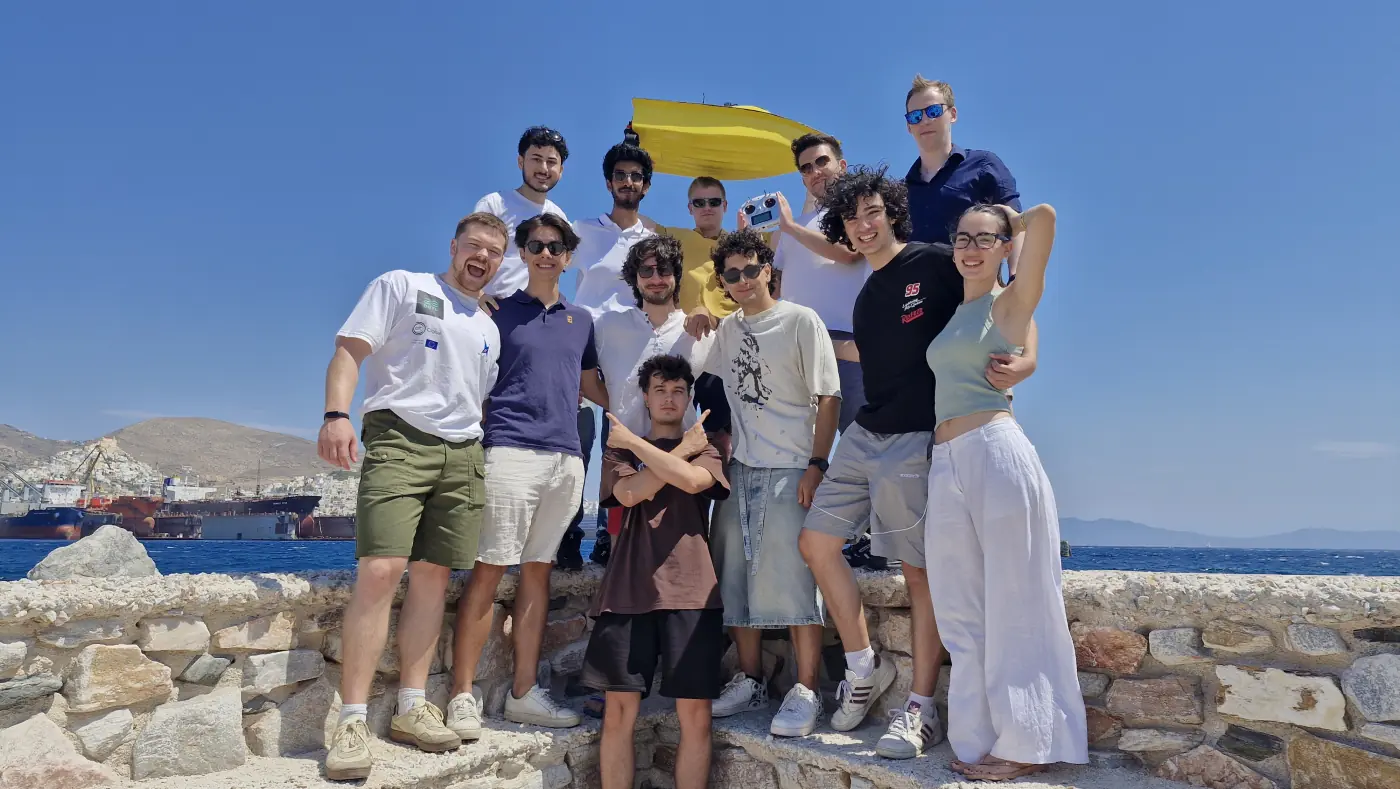
Highlights from the Maritime Informatics & Robotics Summer School 2026: from laboratory sessions and pool testing to sea trials at the marina and the closing presentations at the Nautical Club of Syros. Includes photos contributed by summer school participants.